
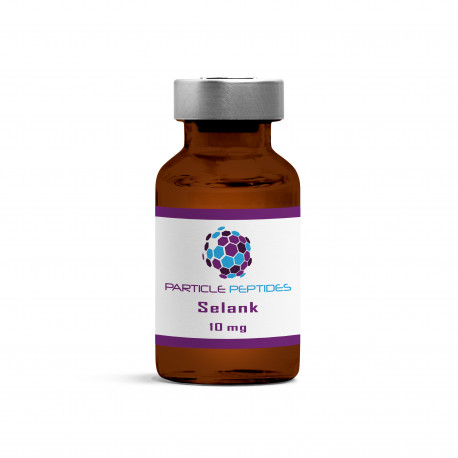
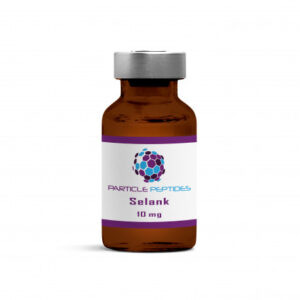
Selank 10mg
$31.99
Selank Peptides 10mg — Proven Nootropic and Anxiolytic Research Compound
Selank peptides represent a synthetic analogue of the human immunomodulatory peptide tuftsin — a naturally occurring tetrapeptide with well-characterised immune regulatory properties. Selank extends this foundation with a heptapeptide architecture that confers nootropic and anxiolytic properties, modulates serotonin metabolism and influences monoamine neurotransmitter concentrations. Developed by researchers at the Institute of Molecular Genetics in Russia during the 1980s, it has accumulated a substantial research profile across anxiety, cognitive enhancement and neuroimmunology. Supplied as a lyophilised powder or gel in a single 10mg vial with a verified purity of ≥98%, this compound is formulated to the precise standards required for in-vitro scientific research.
⚠️ Research Use Only. This product is intended exclusively for in-vitro scientific research. It is not approved for human or animal consumption, clinical use, or therapeutic application.
Table of Contents
- Product Specifications
- Tuftsin Analogue Architecture
- Neurotransmitter Modulation Research
- Nootropic and Cognitive Research
- Anxiolytic Research Profile
- Research Applications
- Reconstitution and Storage
- FAQ
Product Specifications
| Parameter | Detail |
|---|---|
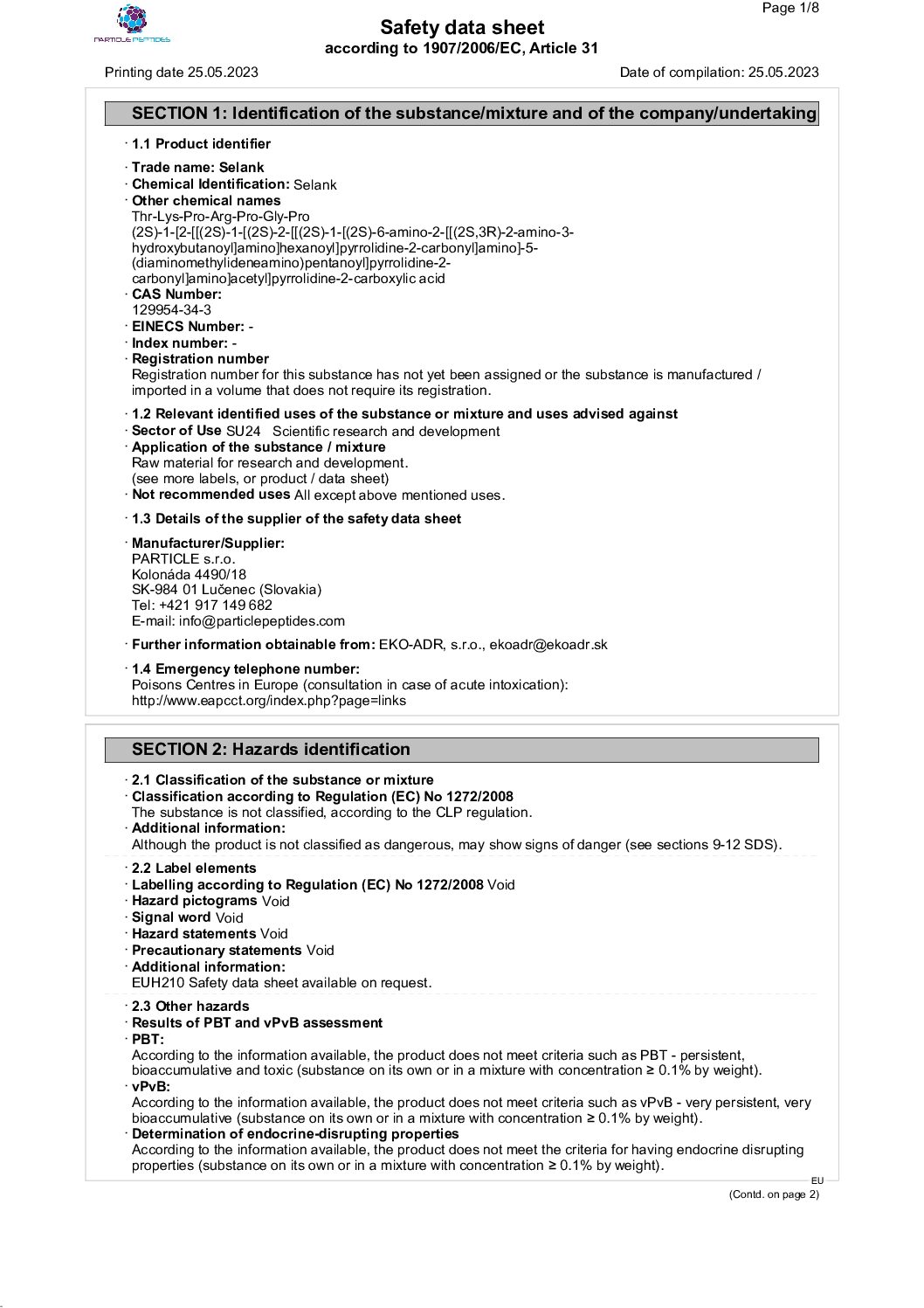
| Peptide | Selank |
| Classification | Synthetic Tuftsin Analogue |
| Quantity | 10mg |
| Unit | 1 Vial |
| Physical Appearance | Powder specks or gel |
| Salt Form | Acetate |
| Peptide Purity | ≥98% |
| Molecular Mass | 751.89 Da |
| CAS Number | 129954-34-3 |
| Solubility | NaCl / Sterile / Bacteriostatic water — 1ml/vial |
| Sequence | Thr-Lys-Pro-Arg-Pro-Gly-Pro |
Tuftsin Analogue Architecture
Selank 10mg is structurally derived from tuftsin — a tetrapeptide (Thr-Lys-Pro-Arg) produced by enzymatic cleavage of IgG immunoglobulin in the spleen. Tuftsin is recognised in immunological research for its capacity to stimulate phagocytic cell activity, modulate macrophage function and regulate IL-6 and related cytokine expression.
The selank sequence extends tuftsin’s tetrapeptide core with a Pro-Gly-Pro tripeptide tail — a structural modification introduced by its developers to enhance metabolic stability and extend the effective half-life of the parent tuftsin sequence while preserving and expanding its biological activity profile.
This structural approach — extending a naturally occurring immunomodulatory sequence to achieve both enhanced stability and new biological properties — produced a compound with a research profile broader than either tuftsin alone or a simple synthetic tuftsin mimic would deliver.
Neurotransmitter Modulation Research
The neurotransmitter modulation properties of buy selank research compounds have been extensively characterised in preclinical models. Research has identified three primary neurotransmitter system interactions.
Serotonin metabolism induction represents the most mechanistically significant finding. Research has demonstrated selank’s capacity to induce serotonin metabolism in relevant brain regions — a property of direct mechanistic relevance to its anxiolytic and mood-related research applications, given serotonin’s central role in anxiety regulation and mood homeostasis.
Monoamine neurotransmitter concentration modulation — affecting dopamine, noradrenaline and serotonin systems — has been characterised across multiple preclinical research frameworks. This broad monoaminergic activity profile provides a mechanistic foundation for the compound’s investigated nootropic and cognitive enhancement properties.
IL-6 expression modulation and T helper cell balance — the immunological properties inherited from the tuftsin parent sequence — represent a third mechanistic axis, connecting selank’s neurological research profile to neuroimmunological investigation.
Nootropic and Cognitive Research
What does selank do in cognitive research contexts is one of the most active areas of current investigation. Research has characterised effects across multiple cognitive domains — memory, learning, attention and cognitive processing speed.
Memory enhancement research has examined selank’s capacity to improve both acquisition and retrieval in learning and memory paradigms — with effects proposed to involve BDNF (brain-derived neurotrophic factor) upregulation and enhanced synaptic plasticity in hippocampal and prefrontal cortical models.
The compound’s monoaminergic modulation properties provide a neurochemical substrate for its investigated effects on attention and processing speed — areas of research relevance to cognitive disorder investigation including ADHD-adjacent research models.
Anxiolytic Research Profile
Selank’s anxiolytic properties have been characterised in preclinical anxiety models — including elevated plus maze, open field and social interaction paradigms used to assess anxiety-related behaviour in research settings.
The serotonin metabolism induction mechanism is proposed as the primary anxiolytic substrate — consistent with the established role of serotonergic signalling in anxiety regulation and the therapeutic mechanism of established pharmacological anxiolytics. The GABA-A receptor modulation — also investigated in selank preclinical research — provides a secondary anxiolytic mechanism of relevance to anxiety disorder biology.
Research has also examined selank’s effects on pain perception — an area connected mechanistically to both its serotonergic activity and its opioid pathway interactions documented in preclinical models.
Research Applications
Selank is investigated within the following approved in-vitro research domains:
- Serotonin metabolism and monoaminergic system modulation
- Nootropic mechanism and cognitive function research
- Memory acquisition and retrieval enhancement studies
- Anxiolytic mechanism and anxiety disorder model investigation
- IL-6 expression modulation and neuroimmunology
- T helper cell balance and immunomodulatory research
- BDNF upregulation and synaptic plasticity research
- Pain perception and nociceptive pathway investigation
- GABA-A receptor modulation studies
Reconstitution and Storage
Reconstitute with NaCl, sterile water or bacteriostatic water at 1ml per vial. Add solvent slowly along the vial wall and allow to dissolve by gentle rotation. Do not shake or vortex.
Store lyophilised material at −20°C. Once reconstituted, maintain at 4°C and use within the timeframe specified by your research protocol. Protect from light and avoid repeated freeze-thaw cycles.
Explore additional nootropic and cognitive research compounds in our Cognitive, Anti-Age and Immunity research categories.
FAQ
What are selank peptides? Selank peptides are a synthetic heptapeptide analogue of the immunomodulatory peptide tuftsin, developed at the Institute of Molecular Genetics in Russia in the 1980s. The compound modulates IL-6 expression, balances T helper cells, induces serotonin metabolism and influences monoamine neurotransmitter concentrations. It has characterised nootropic and anxiolytic properties in preclinical research. Supplied as a 10mg lyophilised powder with ≥98% purity for in-vitro scientific research.
What does selank do in research models? In research models, selank modulates multiple neurochemical and immunological systems simultaneously. It induces serotonin metabolism in relevant brain regions, modulates monoamine neurotransmitter concentrations, potentially upregulates BDNF expression and demonstrates GABA-A receptor interactions. These multi-system effects produce a research profile relevant to anxiety disorder investigation, cognitive enhancement research, memory and learning studies, and pain perception investigation.
Where can I buy selank? Buy selank options are available through specialist research peptide suppliers. This compound is supplied strictly for in-vitro scientific research. It is not approved for human consumption, therapeutic use or clinical application. Researchers should ensure compliance with all applicable institutional requirements when procuring and using this compound.
Where to buy selank for research purposes? Where to buy selank for approved in-vitro research — specialist research peptide platforms supply this compound in lyophilised form with verified purity specifications. Ensure the supplier provides documentation of purity, sequence verification and batch testing before procurement. This compound is for in-vitro research use only.
What is selank 10mg used for in research? Selank 10mg is used in approved in-vitro research investigating nootropic and cognitive enhancement mechanisms, anxiolytic pathway investigation, serotonin and monoamine neurotransmitter modulation, memory and learning biology, IL-6 expression and neuroimmunological pathways, BDNF and synaptic plasticity research, and pain perception investigation. All applications are within approved in-vitro and preclinical research frameworks.
2 reviews for Selank 10mg
Add a review
Related products
Healing and Regeneration research
Longevity and Anti-aging Research
Reproductive Health Research
Weight Loss Research
Longevity and Anti-aging Research
Healing and Regeneration research
Longevity and Anti-aging Research
Cognitive Enhancement Research
vorbelutrioperbir –
An impressive share, I just given this onto a colleague who was doing a little analysis on this. And he in fact bought me breakfast because I found it for him.. smile. So let me reword that: Thnx for the treat! But yeah Thnkx for spending the time to discuss this, I feel strongly about it and love reading more on this topic. If possible, as you become expertise, would you mind updating your blog with more details? It is highly helpful for me. Big thumb up for this blog post!
zoritoler imol –
I’m very happy to read this. This is the kind of manual that needs to be given and not the random misinformation that is at the other blogs. Appreciate your sharing this best doc.