
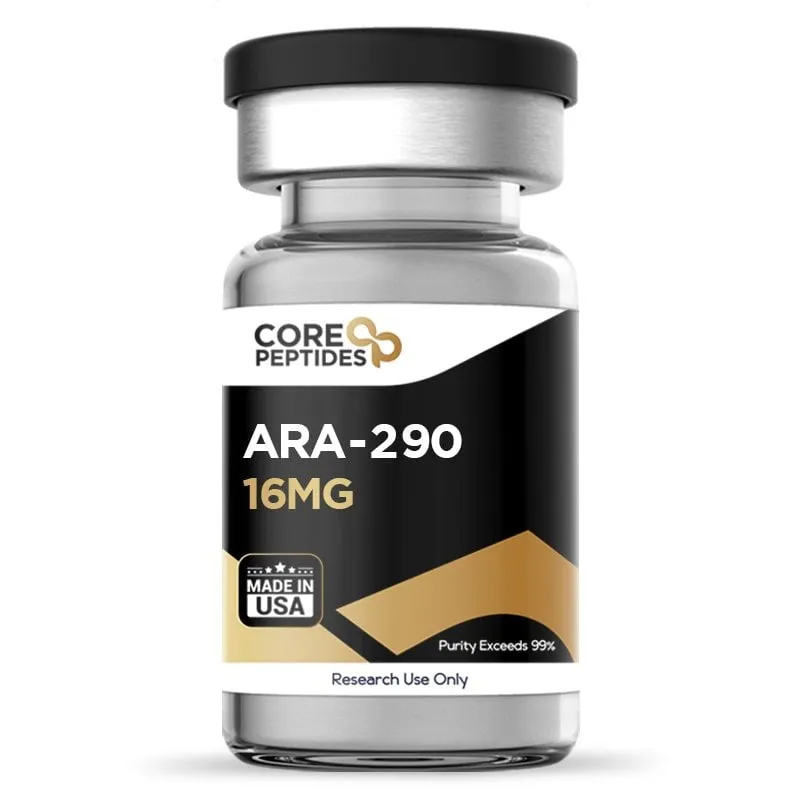
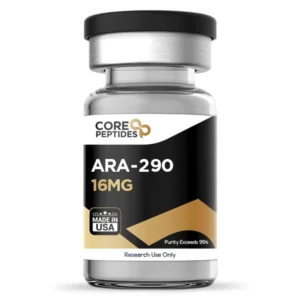
ARA-290 (Cibinetide) 16mg
$82.80
ARA-290 Peptide For Sale — Proven EPO Regenerative Research Compound 16mg
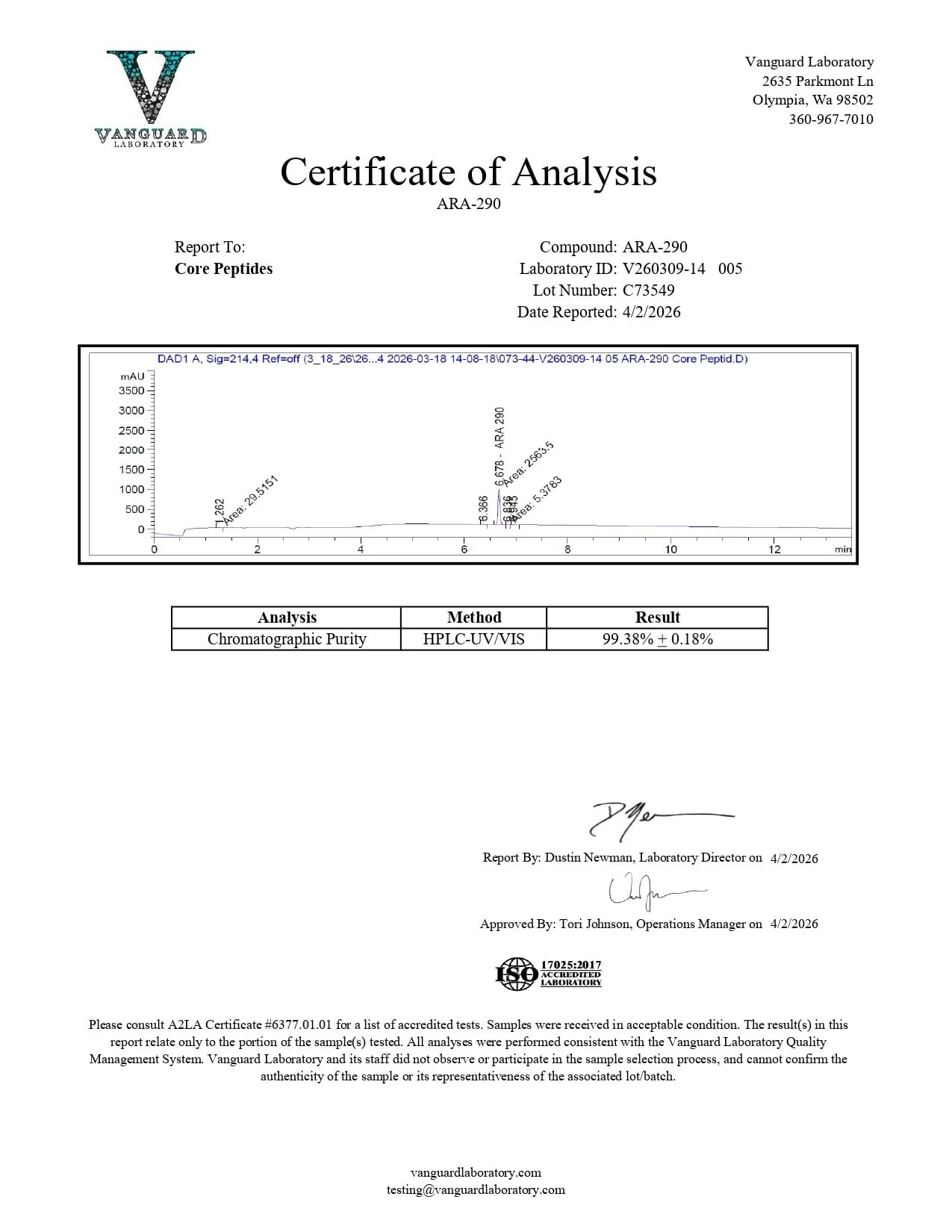
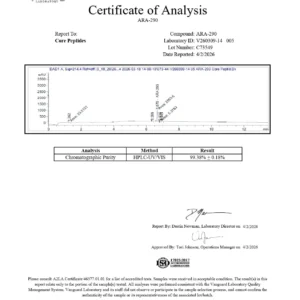
ARA-290 peptide for sale in research-grade form — also known as cibinetide and helix B surface peptide (HBSP) in the scientific literature — is an 11-amino-acid synthetic chain derived from the beta domain of erythropoietin (EPO). Critically, this region of the EPO protein appears to possess the regenerative, anti-inflammatory and anti-nociceptive properties of the original molecule without stimulating red blood cell production — the primary and well-known function of full-length EPO. Supplied as a lyophilised powder in a single 16mg vial with a verified purity of >99%, this compound is formulated to the exacting standards required for advanced in-vitro scientific research.
⚠️ Research Use Only. This product is intended exclusively for in-vitro scientific research. It is not approved for human or animal consumption, clinical use, or therapeutic application.
Table of Contents
- Product Specifications
- EPO Biology and Beta Domain Context
- Tissue Protective Selectivity
- Anti-Inflammatory Research Profile
- Anti-Nociceptive Research
- Research Applications
- Reconstitution and Storage
- FAQ
Product Specifications
| Parameter | Detail |
|---|---|
| Peptide | ARA-290 (Cibinetide / HBSP) |
| Derivation | Erythropoietin (EPO) Beta Domain |
| Residues | 11 amino acids |
| Quantity | 16mg |
| Unit | 1 Vial |
| Form | Lyophilised powder |
| Purity | >99% |
| SKU | P-ARA290-16 |
EPO Biology and Beta Domain Context
To understand the research significance of ara290 peptide, it is essential to first understand erythropoietin — the naturally occurring glycoprotein hormone from which ARA-290 is derived.
EPO is produced primarily by the kidneys and is the principal regulator of red blood cell production (erythropoiesis). Its clinical pharmacology has been well characterised — EPO and its synthetic analogues are used extensively in clinical medicine to treat anaemia associated with chronic kidney disease, chemotherapy and other conditions involving insufficient red blood cell production.
The EPO protein is structurally organised into distinct domains — including the four-helix bundle core responsible for erythropoietic receptor binding, and the beta domain (helix B surface) which has been identified in research as possessing biological activities distinct from the erythropoietic activity of the full protein.
The buy ara-290 research interest lies precisely in this distinction. The beta domain of EPO — from which ARA-290’s 11-amino-acid sequence is derived — appears to engage a separate receptor system — the innate repair receptor (IRR) — rather than the canonical EPO receptor (EPOR) responsible for erythropoiesis. This differential receptor engagement is the proposed mechanistic basis for ARA-290’s tissue protective activities in the absence of red blood cell stimulation.
Tissue Protective Selectivity
The most significant research finding underlying ara-290 peptide for sale interest is the apparent selectivity of the beta domain — and consequently ARA-290 — for tissue protective activities rather than erythropoietic stimulation.
Full-length EPO engagement of the EPOR stimulates red blood cell production — a desirable clinical effect in anaemia, but an undesirable confounding variable in tissue protection and regeneration research, and a safety concern in any therapeutic application requiring sustained use. ARA-290’s derivation from the helix B surface region appears to selectively engage tissue protective receptor systems while avoiding the erythropoietic EPOR pathway.
This selectivity — if confirmed across the full breadth of research investigation — would represent a significant pharmacological advantage for both research applications requiring clean mechanistic separation of EPO’s functions and potential future therapeutic development where erythropoietic stimulation is not the target effect.
Anti-Inflammatory Research Profile
The anti-inflammatory research profile of ara290 peptide encompasses several mechanistic domains. Research has characterised ARA-290’s potential to reduce inflammatory cytokine expression, modulate macrophage activation and protect tissue from inflammatory damage in models of metabolic and neurological disease.
Of particular research interest is the compound’s investigated activity in neuropathic inflammation — with studies examining whether ARA-290’s anti-inflammatory properties extend to peripheral nerve inflammation and the chronic inflammatory states associated with conditions including sarcoidosis, type 2 diabetes and related metabolic-inflammatory disorders.
The innate repair receptor system engaged by ARA-290 is expressed on multiple immune cell types — providing a mechanistic foundation for its anti-inflammatory activity that is distinct from conventional anti-inflammatory mechanisms and potentially complementary to existing research frameworks.
Anti-Nociceptive Research
The anti-nociceptive — pain-reducing — research profile of ARA-290 represents a distinct and clinically relevant area of investigation. Research has examined the compound’s potential to reduce pain signalling in neuropathic pain models — with proposed mechanisms involving both direct modulation of peripheral nociceptor sensitivity and indirect reduction of neuroinflammatory pain drivers.
Painful peripheral neuropathy associated with diabetes and other metabolic conditions has been a specific focus — reflecting the co-occurrence of inflammatory and nociceptive pathology in these conditions and the potential for ARA-290’s combined anti-inflammatory and anti-nociceptive profile to address multiple aspects of neuropathic disease biology simultaneously.
Research Applications
ARA-290 is investigated within the following approved in-vitro research domains:
- EPO beta domain pharmacology and receptor selectivity studies
- Innate repair receptor (IRR) activation research
- Tissue regeneration and repair biology
- Anti-inflammatory cytokine modulation studies
- Peripheral neuropathy and neuroinflammation research
- Anti-nociceptive mechanism investigation
- Metabolic disease and diabetic neuropathy models
- Sarcoidosis and related inflammatory disease research
- Macrophage activation and immune modulation studies
Reconstitution and Storage
Reconstitute following standard lyophilised peptide protocols appropriate to your research application. Store lyophilised powder at −20°C. Once reconstituted, maintain at 4°C and use within the timeframe specified by your research protocol. Protect from light and avoid repeated freeze-thaw cycles.
Explore additional regenerative and immunity research compounds in our Healing, Immunity and Anti-Age research categories.
FAQ
What is ARA-290 peptide for sale? also known as cibinetide and helix B surface peptide (HBSP) — is an 11-amino-acid synthetic chain derived from the beta domain of erythropoietin. Research suggests it possesses regenerative, anti-inflammatory and anti-nociceptive properties without stimulating red blood cell production — the primary function of full-length EPO. Supplied as a 16mg lyophilised powder with >99% purity for in-vitro scientific research.
How does ARA-290 differ from full-length EPO? Full-length EPO primarily engages the canonical EPO receptor (EPOR) to stimulate red blood cell production. ARA-290 is derived from the helix B surface region of EPO — a domain that appears to engage the innate repair receptor (IRR) rather than EPOR. This differential receptor engagement is the proposed basis for ARA-290’s tissue protective and anti-inflammatory activity without erythropoietic stimulation — a mechanistically important distinction for both research design and potential therapeutic research.
Where can I buy ARA-290? Buy ARA-290 options are available through specialist research peptide suppliers. This compound is supplied strictly for in-vitro scientific research. It is not approved for human consumption, therapeutic use or clinical application. Researchers should ensure compliance with all applicable institutional and regulatory requirements when procuring this compound.
What is ARA-290’s anti-nociceptive research significance? ARA-290’s anti-nociceptive research significance lies in its investigated capacity to reduce neuropathic pain signalling — particularly in models of painful peripheral neuropathy associated with diabetes and metabolic disease. The proposed mechanisms involve both direct modulation of peripheral nociceptor sensitivity and indirect reduction of neuroinflammatory pain drivers — a dual-mechanism profile relevant to research on conditions where inflammatory and nociceptive pathology co-occur.
What makes the 16mg ARA-290 format significant for research? The 16mg quantity of this ARA-290 preparation is larger than many standard research peptide vials — reflecting the compound’s research use in studies that may require larger working volumes or extended experimental programmes. This format is appropriate for research groups conducting sustained ARA-290 investigation requiring batch consistency across multiple experimental timepoints.
Be the first to review “ARA-290 (Cibinetide) 16mg”
Related products
Immunity Enhancement Research
Reproductive Health Research
Healing and Regeneration research
Particle Peptides
Cognitive Enhancement Research
Healing and Regeneration research
Immunity Enhancement Research
Cognitive Enhancement Research
Reviews
There are no reviews yet.