


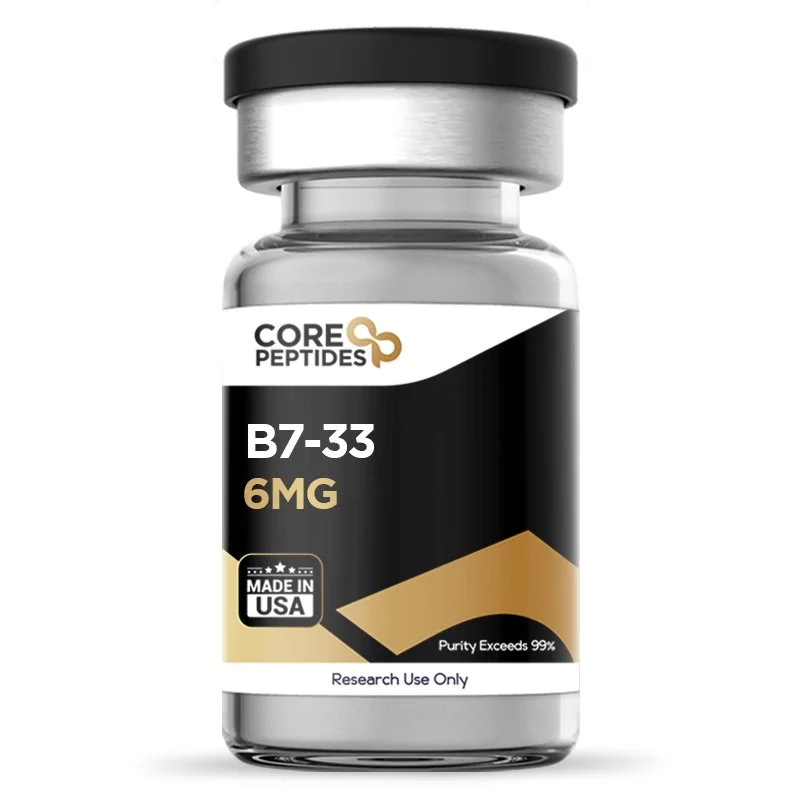
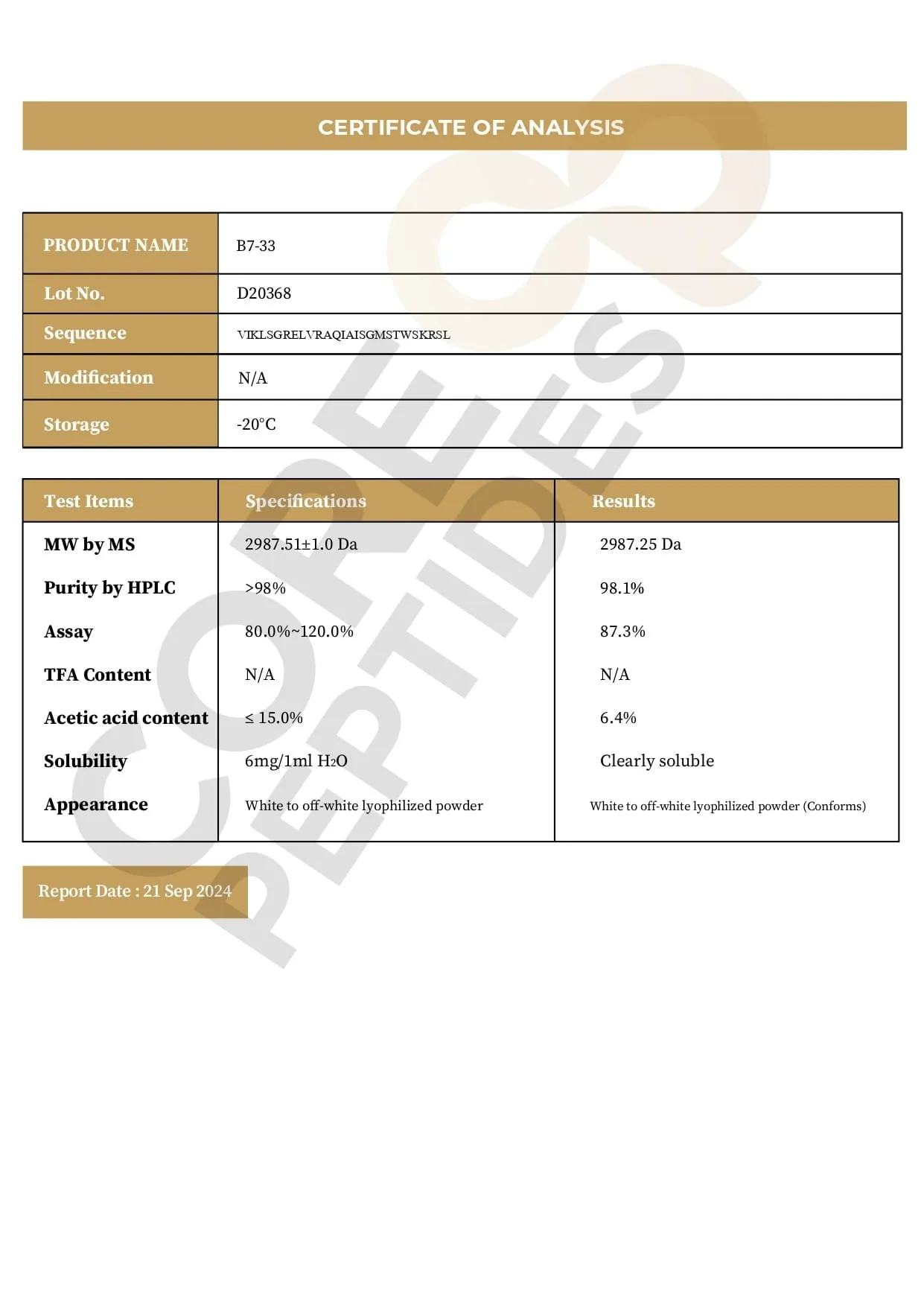

B7-33 (H2-Relaxin Analogue) 6mg
€54.00
B7-33 Peptide 6mg — Proven H2-Relaxin Anti-Fibrotic Research Compound
B7-33 peptide is a synthetic analogue of H2-relaxin — a naturally occurring endogenous protein compound — designed to mimic the structural and functional properties of the parent molecule with enhanced research utility. The H2-relaxin protein family includes relaxin, H3-relaxin, insulin-like peptide-3 and insulin-like peptide-5 — proteins with a broad range of investigated biological actions spanning genetic function, reproductive biology, the musculoskeletal system and cardiovascular physiology. Considered structurally similar to H2-relaxin, B7-33 is investigated primarily for its anti-fibrotic potential and the biology of the four relaxin receptor subtypes it engages. Supplied as a lyophilised powder in a single 6mg vial with a verified purity of >99%, this compound is formulated for in-vitro scientific research.
⚠️ Research Use Only. This product is intended exclusively for in-vitro scientific research. It is not approved for human or animal consumption, clinical use, or therapeutic application.
Table of Contents
- Product Specifications
- H2-Relaxin Biology and B7-33 Derivation
- Relaxin Receptor Biology — RXFP-1 Through RXFP-4
- Anti-Fibrotic Research Profile
- Cardiovascular and Musculoskeletal Research
- Research Applications
- Reconstitution and Storage
- FAQ
Product Specifications
| Parameter | Detail |
|---|---|
| Peptide | B7-33 |
| Parent Molecule | H2-Relaxin |
| Quantity | 6mg |
| Unit | 1 Vial |
| Form | Lyophilised powder |
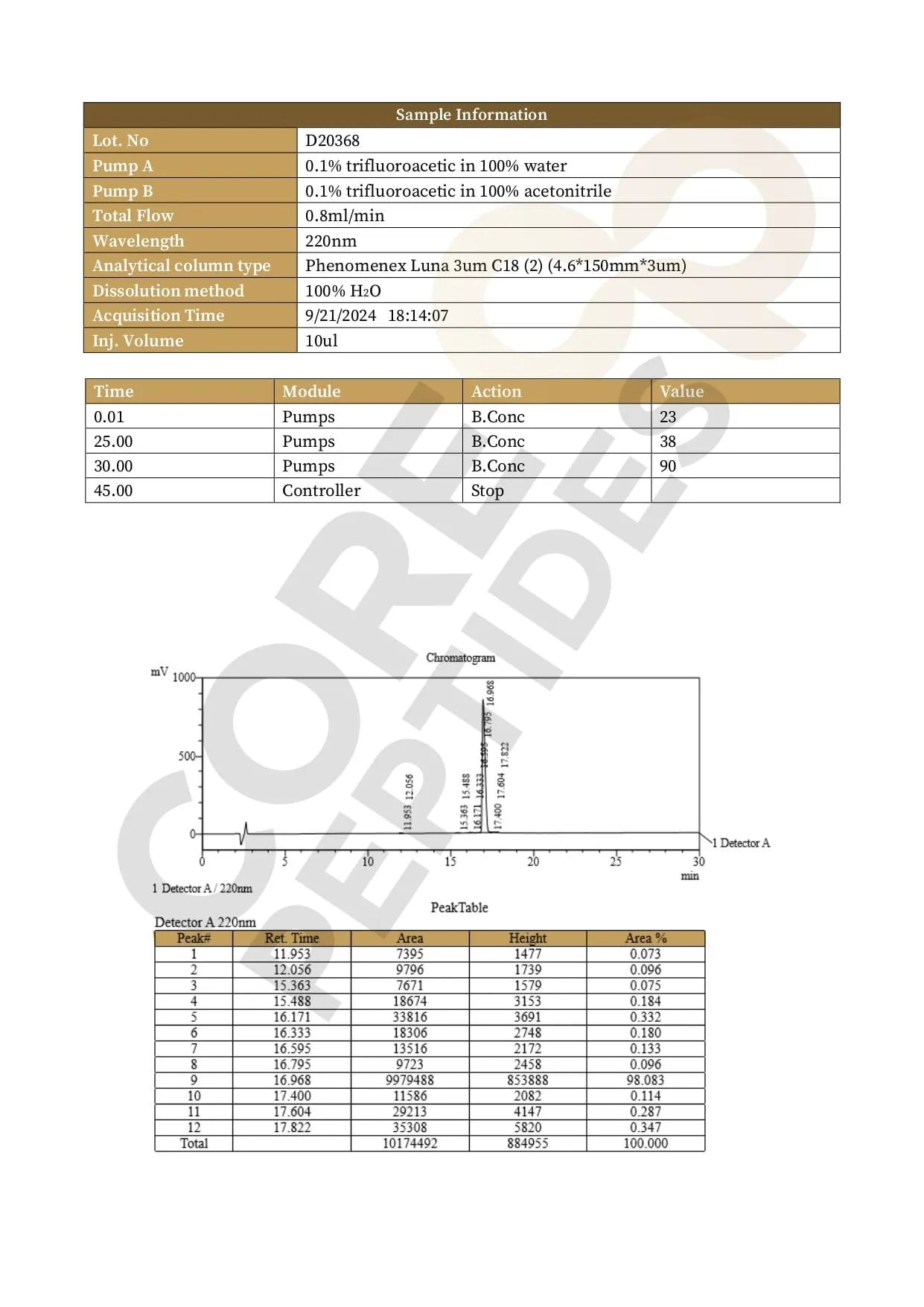
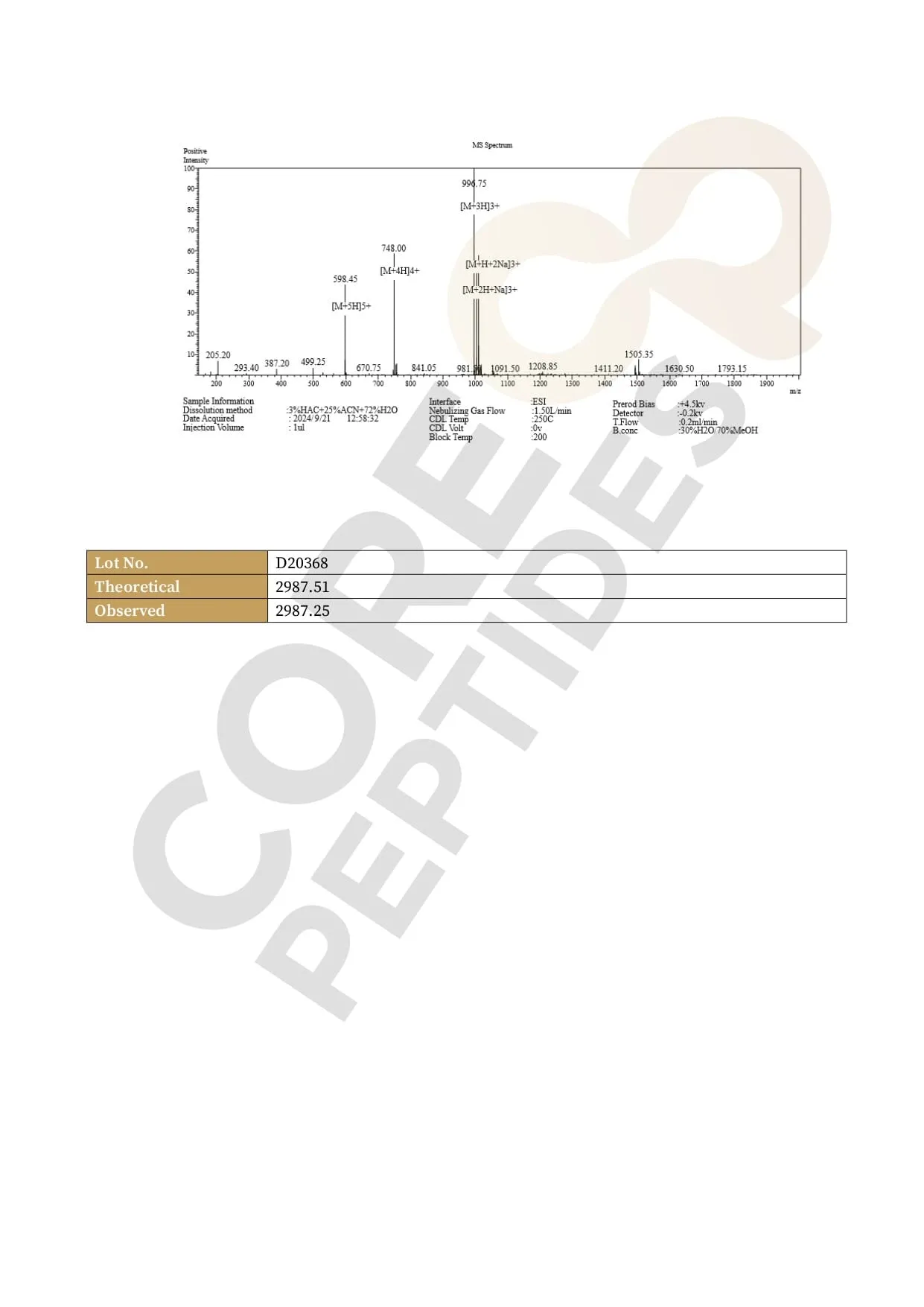
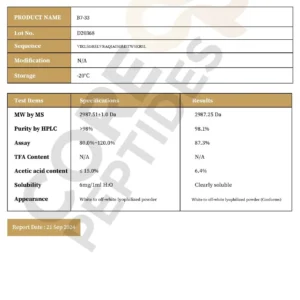
| Purity | >99% |
| SKU | P-B733-6 |
H2-Relaxin Biology and B7-33 Derivation
H2-relaxin is a member of the relaxin peptide superfamily — a family of structurally related proteins characterised by a shared A-chain/B-chain insulin-like architecture. The superfamily includes relaxin, H3-relaxin, insulin-like peptide-3 (INSL3) and insulin-like peptide-5 (INSL5) — each with distinct receptor binding profiles and biological activity domains, but sharing the structural framework that enables their classification as a cohesive research category.
B7-33 was developed as a synthetic equivalent designed to mimic the receptor-binding and functional properties of H2-relaxin in a structurally simplified form. The naming convention reflects its derivation from the B-chain of the relaxin molecule — specifically a sequence designed to engage relaxin receptors with similar affinity to the native H2-relaxin protein while offering practical research advantages in terms of synthesis and supply consistency.
The breadth of biological actions attributed to the relaxin protein family — spanning genetic regulation, reproductive physiology, musculoskeletal biology and cardiovascular function — reflects the broad tissue distribution of the four relaxin receptor subtypes and has driven extensive research into analogues like B7-33.
Relaxin Receptor Biology — RXFP-1 Through RXFP-4
The biological complexity of b7 33 research is substantially determined by the four distinct receptor subtypes through which relaxin family proteins — and their analogues — exert their effects. Each receptor has a characterised activity domain:
RXFP-1 — suggested to influence sperm motility and male reproductive biology. Research has examined the RXFP-1 pathway in the context of male fertility biology and the relaxin family’s broader reproductive system influence.
RXFP-2 — appears to impact testicular development. Research has characterised RXFP-2 involvement in the differentiation and maturation of testicular tissue, with implications for reproductive developmental biology research.
RXFP-3 — may play a role in circadian rhythm regulation and sleep cycle biology. Research examining RXFP-3’s distribution in the central nervous system has identified involvement in the neurochemical circuits governing biological timekeeping — connecting relaxin biology to neuroendocrine and sleep research domains.
RXFP-4 — has shown indications of affecting hunger hormone signalling cycles. Research has examined RXFP-4’s potential involvement in appetite regulation pathways — connecting this receptor to the broader metabolic and endocrine biology of energy homeostasis.
The multi-receptor biology of b7-33 peptide benefits investigation reflects the diverse physiological roles of the relaxin protein family and the broad research footprint that B7-33 occupies as a receptor-engaging analogue.
Anti-Fibrotic Research Profile
The most intensively investigated current research application for B7-33 is its anti-fibrotic potential — an activity shared with the parent H2-relaxin molecule and considered the most therapeutically significant property of the relaxin peptide family.
Fibrosis is the pathological accumulation of extracellular matrix components — particularly collagen — in tissue following chronic inflammation, injury or disease. Progressive fibrosis disrupts organ function in conditions including cardiac fibrosis, pulmonary fibrosis, renal fibrosis and liver cirrhosis. The mechanistic basis of H2-relaxin’s and B7-33’s anti-fibrotic activity is proposed to involve inhibition of TGF-β-mediated fibroblast activation and collagen production — the primary pathological mechanism in fibrotic disease progression.
Research has examined B7-33’s anti-fibrotic activity across multiple organ system models — with cardiac and renal fibrosis representing the most extensively investigated applications given their clinical significance and the established relaxin receptor expression in these tissues.
Cardiovascular and Musculoskeletal Research
The cardiovascular research profile of b7-33 reflects the broad relaxin receptor expression in cardiac and vascular tissue. Research has examined the compound’s potential vasodilatory, anti-fibrotic and anti-inflammatory effects in cardiovascular models — with H2-relaxin’s well-characterised cardiovascular activity in preclinical and clinical research providing the mechanistic context for B7-33 investigation.
Musculoskeletal research has examined the relaxin family’s influence on connective tissue remodelling — with H2-relaxin’s investigated capacity to modulate collagen turnover in ligament, tendon and joint tissue providing a research basis for B7-33 investigation in musculoskeletal injury and repair models.
Research Applications
B7-33 is investigated within the following approved in-vitro research domains:
- H2-relaxin receptor binding and activation studies
- RXFP-1, RXFP-2, RXFP-3 and RXFP-4 pharmacology research
- Anti-fibrotic mechanism investigation in cardiac, renal and pulmonary models
- TGF-β pathway modulation and fibroblast activation research
- Collagen synthesis inhibition and ECM remodelling
- Cardiovascular biology and vasodilatory research
- Musculoskeletal connective tissue remodelling
- Reproductive biology — sperm motility and testicular development research
- Circadian rhythm and RXFP-3 neuroendocrine research
- Appetite regulation and hunger hormone signalling
Reconstitution and Storage
Reconstitute following standard lyophilised peptide protocols appropriate to your research application. Store lyophilised powder at −20°C. Once reconstituted, maintain at 4°C and use within the timeframe specified by your research protocol. Protect from light and avoid repeated freeze-thaw cycles.
Explore additional tissue repair, reproductive health and cardiovascular research compounds in our Healing, Reproductive Health and Anti-Age research categories.
FAQ
What is B7-33 peptide? B7-33 peptide is a synthetic analogue of H2-relaxin — a naturally occurring member of the relaxin protein superfamily. Considered structurally similar to H2-relaxin, B7-33 engages the four relaxin receptor subtypes (RXFP-1 through RXFP-4) and is primarily investigated for its anti-fibrotic potential. Additional research areas span cardiovascular biology, musculoskeletal research, reproductive biology, circadian rhythm regulation and appetite signalling. Supplied as a 6mg lyophilised powder with >99% purity for in-vitro scientific research.
What are B7-33 peptide benefits characterised in research? B7-33 peptide benefits characterised in research centre on its anti-fibrotic potential — inhibiting TGF-β-mediated fibroblast activation and collagen accumulation in cardiac, renal and pulmonary fibrosis models. Additional benefits under investigation include cardiovascular vasodilatory and anti-inflammatory effects, musculoskeletal connective tissue remodelling, reproductive biology via RXFP-1 and RXFP-2 receptor engagement, circadian rhythm modulation through RXFP-3 and appetite hormone signalling through RXFP-4. These are research findings — not approved therapeutic claims.
What is the relationship between B7-33 and H2-relaxin? B7-33 is a synthetic peptide designed to mimic the receptor-binding and functional properties of H2-relaxin — a naturally occurring relaxin family protein. The “B7-33” designation reflects its derivation from the B-chain of the relaxin molecule. B7-33 was developed to provide the research utility of H2-relaxin receptor engagement in a structurally simplified synthetic form — offering consistency and precision advantages in in-vitro research settings compared to recombinant protein preparations.
What are the four relaxin receptors relevant to B7-33 research? The four relaxin receptors engaged by the relaxin protein family are RXFP-1, suggested to influence sperm motility; RXFP-2, associated with testicular development; RXFP-3, proposed to play a role in circadian rhythm and sleep cycle regulation; and RXFP-4, which has shown indications of affecting hunger hormone signalling. B7-33’s potential engagement of these receptor subtypes provides a research entry point across all four biological domains.
What makes B7-33 particularly relevant to fibrosis research? B7-33’s anti-fibrotic potential is the most intensively investigated property — reflecting H2-relaxin’s well-characterised capacity to inhibit TGF-β-mediated fibroblast activation, the primary driver of pathological collagen accumulation in fibrotic disease. Progressive fibrosis in cardiac, renal and pulmonary tissue represents a significant unmet research need, and B7-33’s investigated capacity to address the TGF-β fibrotic pathway without the supply limitations of recombinant H2-relaxin makes it a research compound of sustained interest.
2 reviews for B7-33 (H2-Relaxin Analogue) 6mg
Add a review
Related products
Longevity and Anti-aging Research
Reproductive Health Research
Longevity and Anti-aging Research

Healing and Regeneration research

Muscle Growth research

Core Peptides
Immunity Enhancement Research
Particle Peptides
zimerov ertover –
Some really interesting points you have written.Helped me a lot, just what I was looking for :D.
arderborelnot –
Hi my family member! I wish to say that this post is amazing, nice written and include approximately all vital infos. I would like to look more posts like this .