
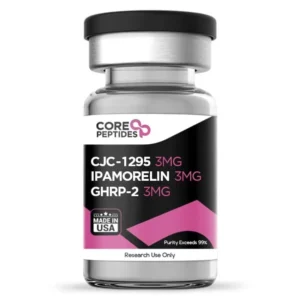
CJC-1295 (Mod GRF 1-29) & Ipamorelin & GHRP-2 Blend 9mg
€72.90
CJC 1295 Ipamorelin — Proven Triple GH Secretagogue Research Blend 9mg
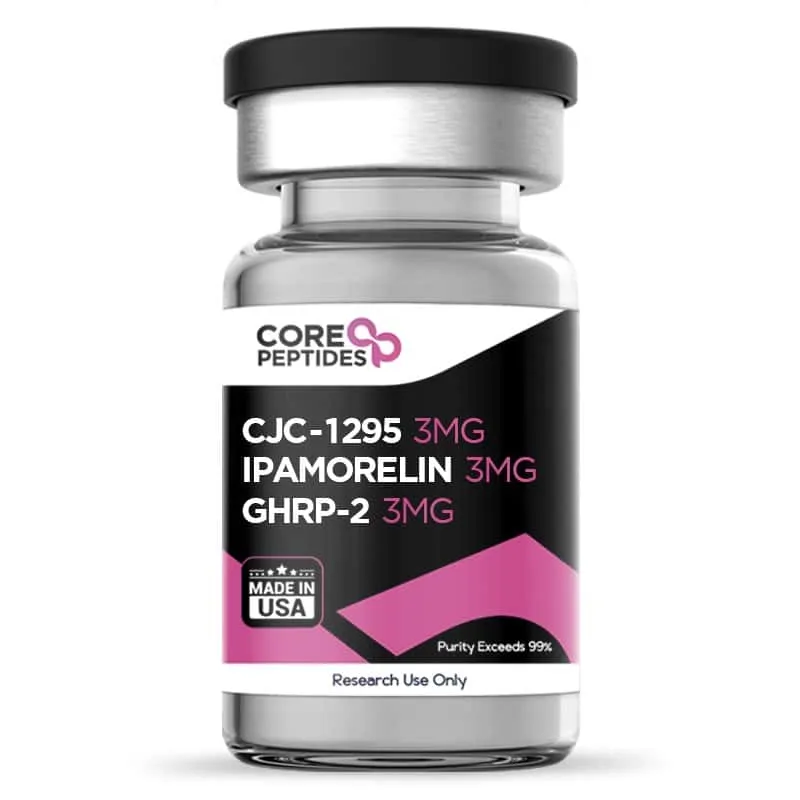
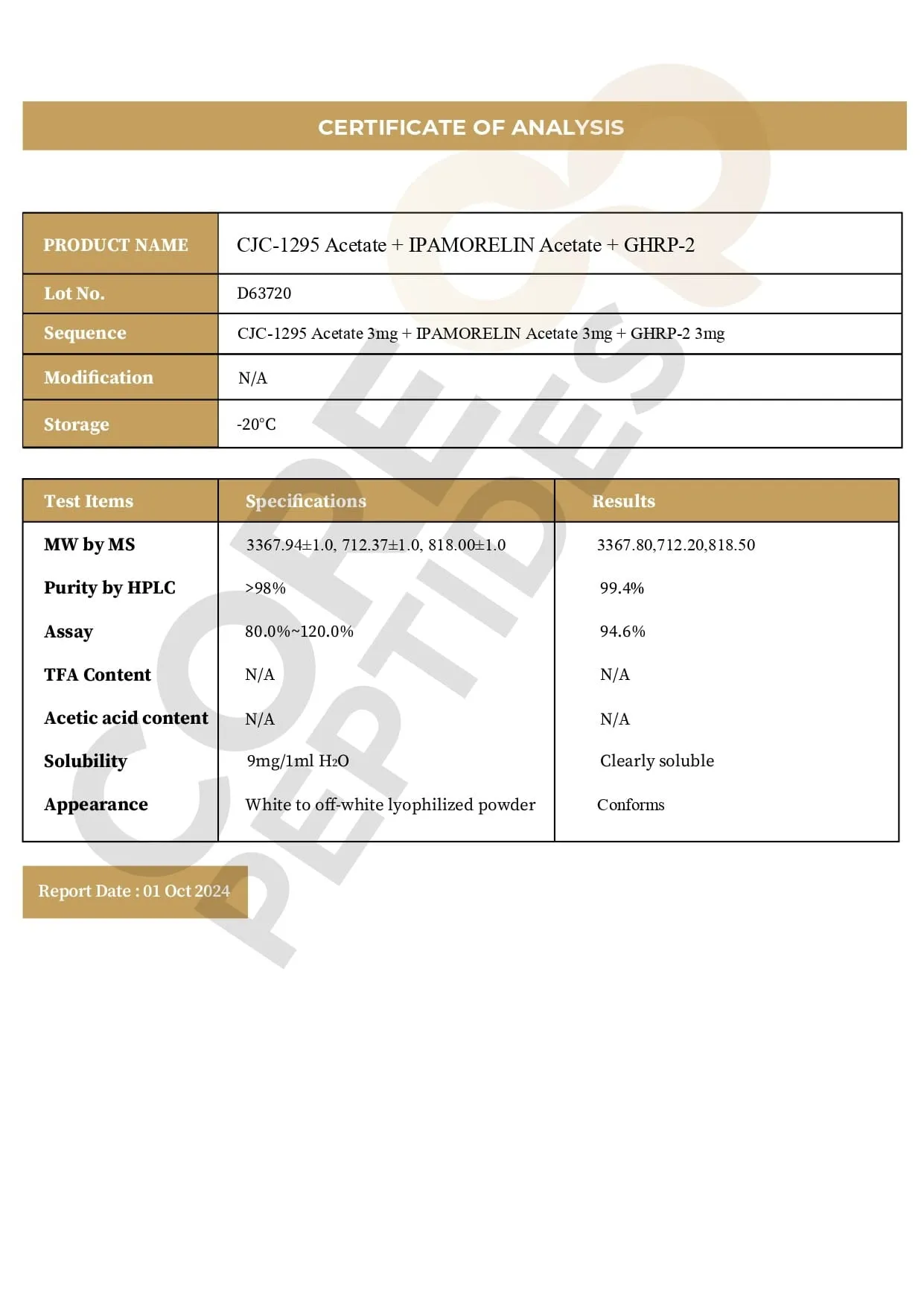
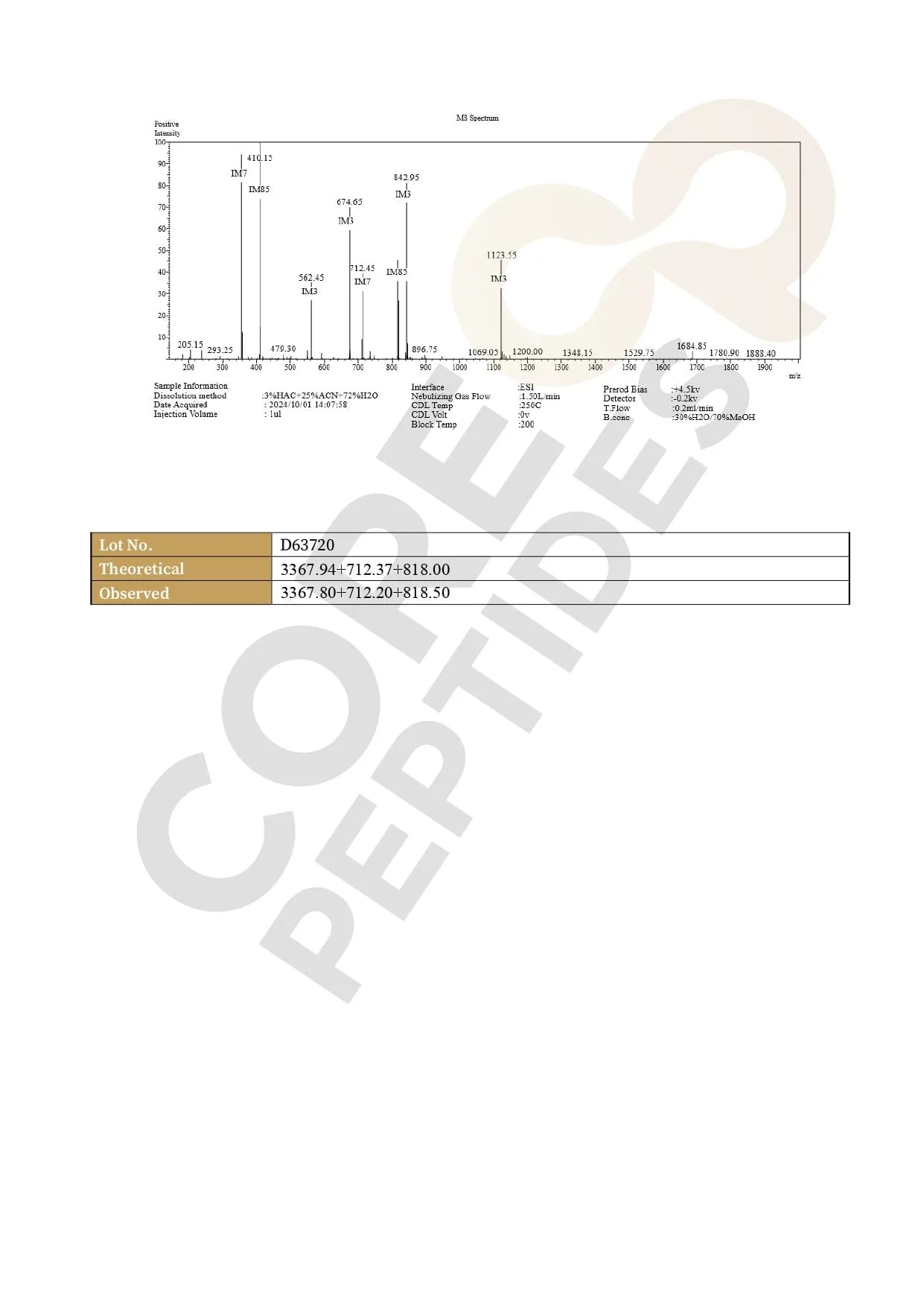
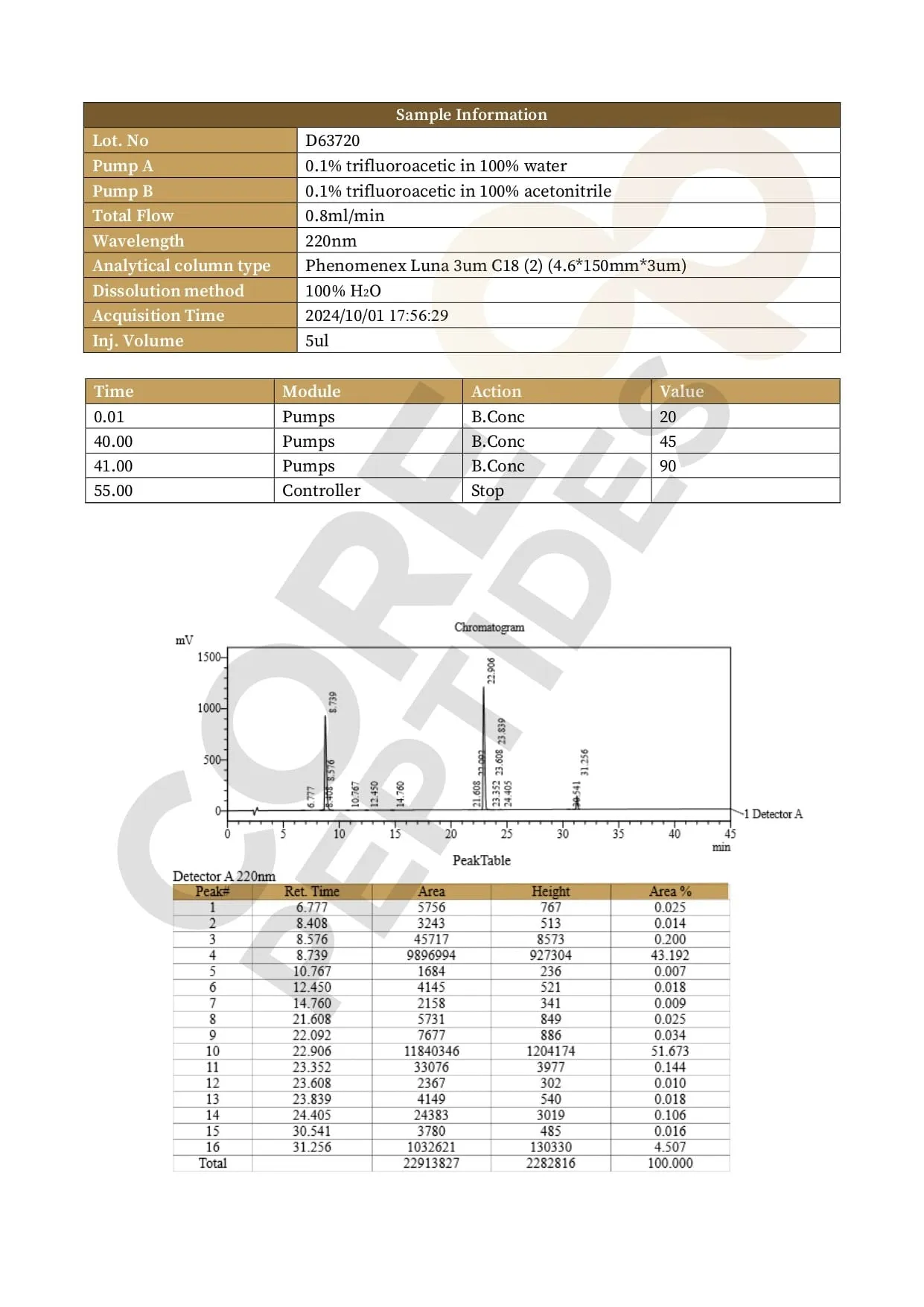
The CJC 1295 ipamorelin and GHRP-2 research blend is a precision-formulated preparation combining three distinct synthetic peptides — all independently characterised as growth hormone secretagogues — in a single 9mg lyophilised vial at 3mg each. CJC-1295 No DAC (Mod GRF 1-29) engages the GHRH receptor. Ipamorelin and GHRP-2 both engage the GHS-R1a (ghrelin receptor). By stimulating GH release through two distinct receptor systems simultaneously, this blend is proposed by researchers to achieve a synergistic elevation in GH secretion beyond what any single component can deliver independently. Supplied at >99% purity for in-vitro scientific research.
⚠️ Research Use Only. This product is intended exclusively for in-vitro scientific research. It is not approved for human or animal consumption, clinical use, or therapeutic application.
Table of Contents
- Product Specifications
- CJC-1295 No DAC Component Profile
- Ipamorelin Component Profile
- GHRP-2 Component Profile
- Synergistic Receptor Research Rationale
- Research Applications
- Reconstitution and Storage
- FAQ
Product Specifications
| Parameter | Detail |
|---|---|
| Blend | CJC-1295 No DAC + Ipamorelin + GHRP-2 |
| Total Quantity | 9mg |
| CJC-1295 No DAC (Mod GRF 1-29) | 3mg |
| Ipamorelin | 3mg |
| GHRP-2 | 3mg |
| Form | Lyophilised powder |
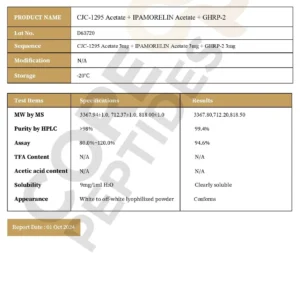
| Purity | >99% |
| SKU | P-CJCIPAMGHR2-9 |
CJC-1295 No DAC Component Profile
CJC-1295 No DAC — also designated Mod GRF 1-29 — is considered to be an agonist to the receptors for native Growth Hormone-Releasing Hormone (GHRH). It is an analogue of the truncated GHRH (1-29) sequence — considered the shortest functional sequence of GHRH comprising its initial 29 amino acids — modified through tetrasubstitution to enhance stability and receptor affinity.
As a GHRH receptor agonist, cjc-1295 in this blend component engages the pituitary GHRH receptor to stimulate GH synthesis and secretion through the cAMP-mediated signalling cascade characteristic of GHRHR activation. The No DAC specification confirms this preparation does not include the albumin-binding Drug Affinity Complex modification — producing a more acute, pulsatile GH release profile appropriate for the research parameters of this blend.
Ipamorelin Component Profile
Ipamorelin is a pentapeptide that mirrors the effects of the natural hunger hormone ghrelin. It activates GHS-R1a (Growth Hormone Secretagogue Receptor 1a) in the pituitary gland — a receptor distinct from the GHRH receptor engaged by CJC-1295 — to trigger GH release through a mechanistically separate pathway.
The key distinguishing research feature of ipamorelin in the context of cjc 1295 with ipamorelin blend research is its selectivity. Unlike GHRP-2, ipamorelin does not produce significant ACTH or cortisol elevation at GH-stimulating doses — making it the cleaner of the two GHS-R1a agonists in this blend for research protocols where adrenal axis confounding is undesirable.
GHRP-2 Component Profile
GHRP-2 — Growth Hormone Releasing Peptide 2 — is a synthetic hexapeptide that binds to GHS-R1a receptors in the hypothalamus and pituitary gland. Like ipamorelin, it activates GH release through the ghrelin receptor pathway — but with a distinct pharmacological profile that includes ACTH and cortisol elevation alongside GH stimulation, and a stronger appetite-stimulating effect through hypothalamic ghrelin receptor engagement.
The inclusion of both ipamorelin and GHRP-2 in the ipamorelin cjc 1295 GHRP-2 blend provides dual engagement of the GHS-R1a pathway through two structurally distinct peptides — a research approach that enables investigation of comparative GHS-R1a agonist activity within the same experimental context.
Synergistic Receptor Research Rationale
The cjc-1295 ipamorelin GHRP-2 blend achieves multi-receptor GH secretagogue coverage through two pharmacologically distinct pathways.
CJC-1295 No DAC engages the GHRH receptor (GHRHR) — stimulating GH release through the cAMP-PKA pathway activated by GHRH receptor signalling. Ipamorelin and GHRP-2 both engage GHS-R1a — stimulating GH release through the IP3/calcium signalling pathway activated by ghrelin receptor engagement.
These two pathways — cAMP-mediated and calcium-mediated — are mechanistically distinct and act on different intracellular signalling systems. Simultaneous activation of both pathways through cjc 1295 with ipamorelin and GHRP-2 combination is proposed by anecdotal research reports and in-vitro observations to produce synergistic rather than simply additive GH release — a research hypothesis that continues to drive investigation into triple-combination GH secretagogue blends.
Research Applications
This blend is investigated within the following approved in-vitro research domains:
- Multi-receptor GH secretagogue synergy research
- GHRH receptor and GHS-R1a simultaneous activation studies
- Comparative ipamorelin vs GHRP-2 GHS-R1a activity research
- GH pulsatility and secretion pattern investigation
- IGF-1 axis modulation downstream of multi-secretagogue stimulation
- Anabolic signalling pathway research
- Metabolic rate and body composition investigation
- Sleep architecture and GH pulse correlation studies
Reconstitution and Storage
Reconstitute with sterile or bacteriostatic water following standard lyophilised peptide protocols. Store lyophilised powder at −20°C. Once reconstituted, maintain at 4°C and use within the timeframe specified by your research protocol. Protect from light and avoid repeated freeze-thaw cycles.
Explore additional GH secretagogue and peptide blend research compounds in our Anti-Age, Muscle Growth and Weight Loss research categories.
FAQ
What is the CJC 1295 ipamorelin GHRP-2 blend? The CJC 1295 ipamorelin GHRP-2 blend is a 9mg lyophilised research preparation combining three GH secretagogue peptides — CJC-1295 No DAC / Mod GRF 1-29 (3mg), Ipamorelin (3mg) and GHRP-2 (3mg) — each at 3mg in a single vial at >99% purity. CJC-1295 engages the GHRH receptor. Ipamorelin and GHRP-2 both engage GHS-R1a through distinct pharmacological profiles. Together, they are proposed to synergistically elevate GH release through complementary receptor pathways. For in-vitro scientific research only.
Why combine CJC-1295 with ipamorelin and GHRP-2? Combining cjc-1295 with ipamorelin and GHRP-2 provides multi-receptor GH secretagogue research coverage. CJC-1295 activates the GHRH receptor through the cAMP-PKA intracellular pathway. Ipamorelin and GHRP-2 both activate GHS-R1a through the IP3/calcium pathway — a mechanistically distinct signalling cascade. Simultaneous activation of both receptor systems is proposed to produce synergistic GH release beyond the individual capacity of each component — making this blend appropriate for research examining multi-secretagogue GH axis stimulation.
What is the difference between ipamorelin and GHRP-2 in this blend? Both ipamorelin and GHRP-2 are GHS-R1a agonists, but with distinct pharmacological profiles. Ipamorelin is selective — it does not produce significant ACTH or cortisol elevation at GH-stimulating doses. GHRP-2 produces ACTH and cortisol elevation alongside GH stimulation and has a stronger appetite-stimulating effect. Including both in the ipamorelin cjc 1295 GHRP-2 blend enables comparative GHS-R1a pharmacology investigation within the same experimental framework.
What is CJC-1295 in this blend and does it have DAC? in this blend is the No DAC formulation — designated Mod GRF 1-29 — without the Drug Affinity Complex albumin-binding modification. This produces a more acute, pulsatile GH release profile compared to CJC-1295 with DAC, which produces sustained stimulation through extended half-life. The No DAC specification is confirmed by the blend’s SKU and component contents.
What research applications is the cjc 1295 ipamorelin blend used for? The cjc 1295 ipamorelin GHRP-2 blend is used in approved in-vitro research examining multi-receptor GH secretagogue synergy, GHRH receptor and GHS-R1a simultaneous activation, comparative GHS-R1a agonist pharmacology, GH pulsatility investigation, IGF-1 axis modulation, anabolic signalling pathway research, metabolic rate investigation and sleep architecture correlation. All applications are within approved in-vitro and preclinical frameworks.
3 reviews for CJC-1295 (Mod GRF 1-29) & Ipamorelin & GHRP-2 Blend 9mg
Add a review
Related products
Longevity and Anti-aging Research
Reproductive Health Research
Cognitive Enhancement Research
Longevity and Anti-aging Research
Longevity and Anti-aging Research
Cognitive Enhancement Research
Longevity and Anti-aging Research
Healing and Regeneration research
vorbelutrioperbir –
Its excellent as your other articles : D, thankyou for putting up.
zoritoler imol –
I like this post, enjoyed this one thanks for putting up. “What is a thousand years Time is short for one who thinks, endless for one who yearns.” by Alain.
arderbor elnot –
I am not sure where you are getting your info, but great topic. I needs to spend some time learning much more or understanding more. Thanks for wonderful information I was looking for this info for my mission.