BPC-157 & TB-500 Blend 10mg / 20mg
$94.50 $175.50Price range: $94.50 through $175.50
BPC 157 and TB500 Blend — Proven Dual Peptide Healing Research
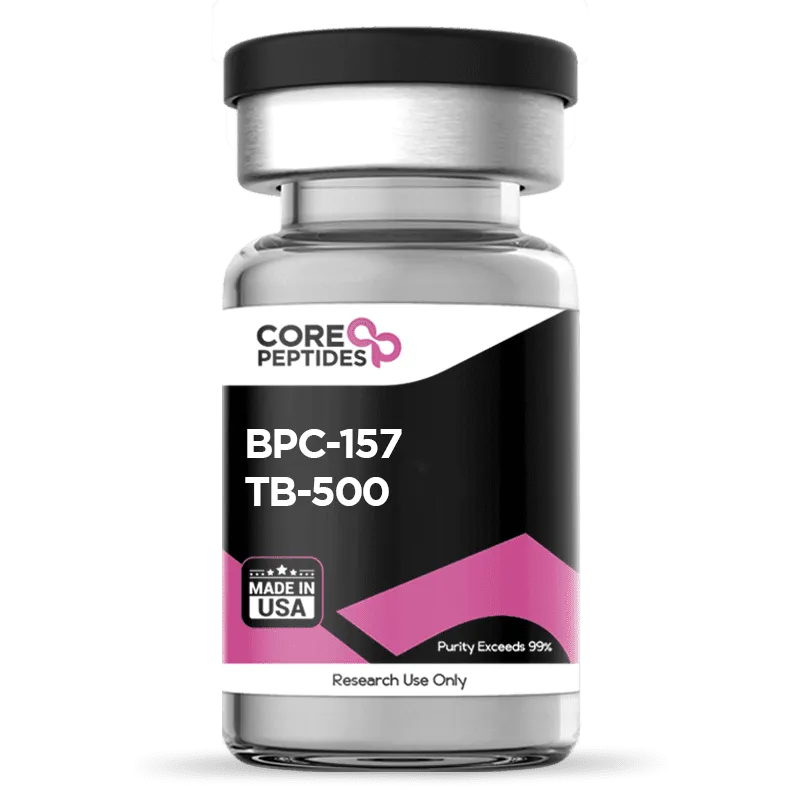
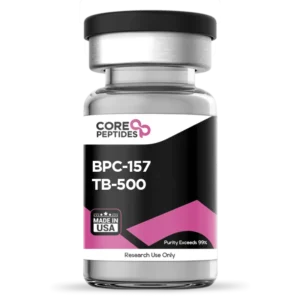
The bpc 157 and tb500 blend is a precision-formulated research preparation combining two of the most widely studied synthetic peptides in tissue repair and healing biology in equal-ratio quantities. BPC-157 — Body Protection Compound 157, composed of 15 amino acids — and TB-500 — the synthetic equivalent of 43-amino-acid Thymosin Beta-4 — are both synthetic polypeptides with characterised but mechanistically distinct research profiles. Together, they are proposed by researchers to offer complementary activity across the angiogenic, cellular and inflammatory dimensions of tissue repair investigation. Available in two sizes — 10mg (5mg each) and 20mg (10mg each) — at >99% purity, this blend is formulated to the precise standards required for in-vitro scientific research.
⚠️ Research Use Only. This product is intended exclusively for in-vitro scientific research. It is not approved for human or animal consumption, clinical use, or therapeutic application.
Table of Contents
- Product Specifications
- BPC-157 Research Profile
- TB-500 Research Profile
- Complementary Mechanism Research Rationale
- Research Applications
- Reconstitution and Storage
- FAQ
Product Specifications
| Parameter | 10mg Vial | 20mg Vial |
|---|---|---|
| BPC-157 | 5mg | 10mg |
| TB-500 (Thymosin Beta-4) | 5mg | 10mg |
| Total | 10mg | 20mg |
| Form | Lyophilised powder | Lyophilised powder |
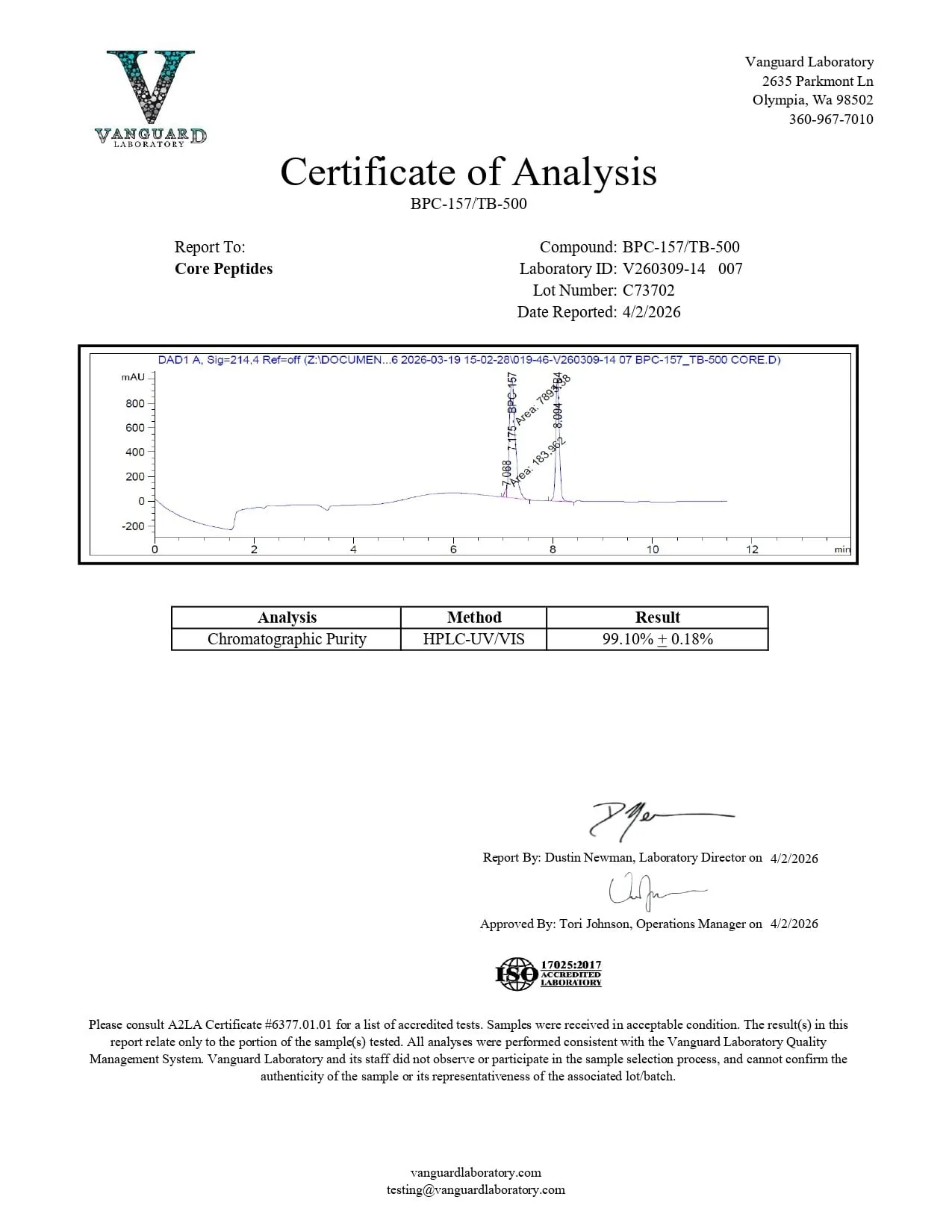
| Purity | >99% | >99% |
| SKU | P-BPC157TB500 | P-BPC157TB500 |
BPC-157 Research Profile
BPC-157 — also known as Pentadecapeptide BPC 157 or Body Protection Compound 157 — is a wholly synthetic peptide speculated to engage cellular communication routes relevant to rejuvenation and tissue recovery. Research studies suggest it may possess capabilities to encourage blood vessel formation through angiogenic signalling and regulate inflammation-related activities through pro-inflammatory pathway modulation.
Experimental findings have posited that BPC-157 may aid in protecting and regenerating various cells and tissues. It has been suggested across multiple studies to potentially assist with healing in joint, tendon and muscle tissue, as well as nerve tissue — making it one of the most broadly investigated healing peptides currently available in research-grade form.
The 15-amino-acid structure of BPC-157 — compact relative to the 43-amino-acid TB-500 — provides a research compound with distinct pharmacokinetic and receptor engagement properties that complement rather than replicate the activity of its blend partner.
TB-500 Research Profile
TB-500 — the synthetic preparation of Thymosin Beta-4, encoded naturally by the TMSB4X gene — has been suggested by researchers to possibly assist in healing processes after injury, with particular investigation in brain and neurological injury contexts alongside wound healing and tissue repair research.
TB-500 modulates cell movement, differentiation and tissue healing through its central actin-binding activity — the mechanism through which Thymosin Beta-4 regulates the balance between G-actin and F-actin within cells, directly influencing cell motility and the cytoskeletal organisation required for tissue repair. Investigations further indicate that TB-500 may encourage angiogenesis alongside cellular and tissue renewal — a mechanistic overlap with BPC-157 that reinforces rather than duplicates the angiogenic research dimension of the blend.
The 43-amino-acid structure of TB-500 — significantly larger than BPC-157 — reflects a more complex molecular architecture with multiple functional domains, including the central actin-binding LKKTETQ sequence (corresponding to the ABP-7 fragment) and regions involved in anti-inflammatory and angiogenic signalling.
Complementary Mechanism Research Rationale
The bpc-157/tb-500 blend research rationale is built on the principle of mechanistic complementarity — both peptides engage tissue repair biology, but through pathways that are distinct enough to avoid redundancy while covering a broader mechanistic range together than either achieves alone.
BPC-157’s primary mechanistic contributions involve angiogenic receptor signalling and pro-inflammatory pathway attenuation — primarily relevant to vascular repair and the management of the inflammatory phase of healing. TB-500’s primary mechanistic contributions involve actin-dependent cell migration and cytoskeletal organisation — primarily relevant to the cellular motility phase of repair that drives wound closure and tissue reconstitution.
Where both compounds share angiogenic research relevance, the molecular pathways through which they engage angiogenic biology differ — providing redundancy through mechanistic diversity rather than simple duplication. This makes the bpc 157 tb 500 blend a more mechanistically robust research tool for comprehensive tissue repair investigation than either compound alone.
Research Applications
This blend is investigated within the following approved in-vitro research domains:
- Dual-mechanism angiogenesis and vascular repair research
- Cell migration and cytoskeletal organisation combined studies
- Multi-pathway anti-inflammatory mechanism investigation
- Joint, tendon and muscle tissue healing biology
- Nerve tissue repair and neuroprotective research
- Wound healing and tissue reconstitution studies
- Comparative blend vs individual component activity research
- Brain and neurological tissue injury models
Reconstitution and Storage
Reconstitute with sterile or bacteriostatic water at 1ml per vial for the 10mg format. Add solvent slowly along the vial wall and allow to dissolve by gentle rotation. Do not shake or vortex.
Store lyophilised powder at −20°C. Once reconstituted, maintain at 4°C and use within the timeframe specified by your research protocol. Protect from light and avoid repeated freeze-thaw cycles.
Explore additional healing research peptides and blends in our Healing, Anti-Age and Immunity research categories.
FAQ
What is the BPC 157 and TB500 blend? The BPC 157 and TB500 blend is a lyophilised research preparation combining BPC-157 (Body Protection Compound 157, 15 amino acids) and TB-500 (synthetic Thymosin Beta-4, 43 amino acids) in equal ratios — available in 10mg (5mg each) and 20mg (10mg each) vials at >99% purity. Both peptides are characterised for tissue repair and healing research, with complementary mechanistic profiles covering angiogenic signalling, cell migration and anti-inflammatory biology. For in-vitro scientific research only.
Where to buy BPC 157 and TB 500 for research? Where to buy bpc 157 and tb 500 for in-vitro research — specialist research peptide suppliers provide this compound in both individual and blend formats. This blend is supplied strictly for in-vitro scientific research. It is not approved for human consumption, therapeutic use or clinical application. Researchers should verify supplier purity documentation and batch testing credentials before procurement.
Is tb500 for sale in this blend format research-appropriate? Yes — tb500 for sale in this blend format maintains the same >99% purity specification as individual TB-500 preparations. The blend format is appropriate for research protocols investigating the combined activity of BPC-157 and TB-500 across tissue repair biology. For research requiring precise individual compound dosing or mechanistic isolation, individual compound preparations are the more appropriate choice.
What makes the BPC 157 TB 500 blend different from individual preparations? The bpc 157 tb 500 blend difference from individual preparations is the co-administration of both compounds in a single reconstituted solution — enabling investigation of their combined and potentially synergistic activity at a ratio designed for research purposes. Individual preparations allow mechanistic isolation of each compound’s activity. The blend format is suited to research protocols specifically examining combined or comparative multi-compound activity.
Which size format — 10mg or 20mg — is more appropriate for research? The 10mg format (5mg BPC-157 + 5mg TB-500) is appropriate for initial research investigation, single experimental series or lower-volume assay requirements. The 20mg format (10mg each) provides a larger research supply suited to extended programmes, multiple experimental series or studies requiring consistent batch material across multiple timepoints. Both formats carry identical >99% purity specification.
What is the mechanistic basis for combining BPC-157 and TB-500? The mechanistic basis for the bpc-157/tb-500 blend rests on complementary pathway engagement. BPC-157 primarily addresses angiogenic signalling and pro-inflammatory pathway attenuation. TB-500 primarily addresses actin-dependent cell migration and cytoskeletal organisation. Together, they cover the vascular, cellular and inflammatory dimensions of tissue repair research — with both contributing to angiogenic biology through distinct molecular pathways, providing mechanistic breadth without simple duplication.
| Select Size | 10mg, 20mg |
|---|
Be the first to review “BPC-157 & TB-500 Blend 10mg / 20mg”
Related products
Reproductive Health Research
Core Peptides
Healing and Regeneration research
Muscle Growth research
Healing and Regeneration research
Longevity and Anti-aging Research
Longevity and Anti-aging Research
Immunity Enhancement Research
Reviews
There are no reviews yet.