CJC-1295 No DAC & GHRP-2 Blend 10mg
$75.60
CJC-1295 and GHRP-2 — Proven Dual GH Secretagogue Research Blend 10mg
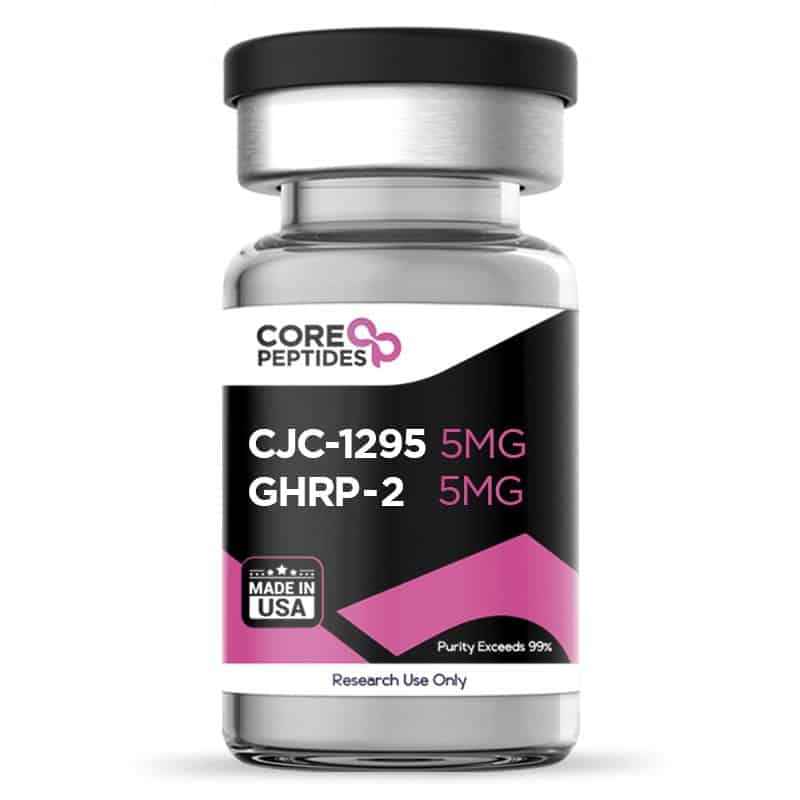
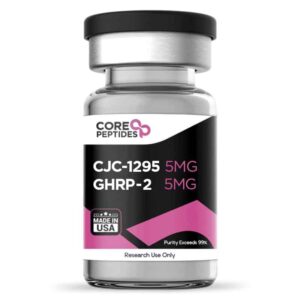
The CJC-1295 & GHRP-2 research blend is a precision-formulated dual-peptide preparation combining two established GH secretagogue research compounds — CJC-1295 No DAC (5mg) and GHRP-2 (5mg) — in a single 10mg lyophilised vial. Research indicates that these two peptides act on separate receptors — GHRHR for CJC-1295 and GHS-R1a for GHRP-2 — potentially enhancing GH release from the anterior pituitary through distinct but complementary biochemical pathways. By stimulating different intracellular signalling cascades simultaneously, this blend is believed by researchers to synergistically elevate GH secretion beyond the individual capacity of each component. Supplied at >99% purity for in-vitro scientific research.
⚠️ Research Use Only. This product is intended exclusively for in-vitro scientific research. It is not approved for human or animal consumption, clinical use, or therapeutic application.
Table of Contents
- Product Specifications
- CJC-1295 No DAC Component Profile
- GHRP-2 Component Profile
- Dual-Receptor Research Rationale
- GHRP-2 Benefits in Research Context
- Research Applications
- Reconstitution and Storage
- FAQ
Product Specifications
| Parameter | Detail |
|---|---|
| Blend | CJC-1295 No DAC + GHRP-2 |
| Total Quantity | 10mg |
| CJC-1295 No DAC (Mod GRF 1-29) | 5mg |
| GHRP-2 | 5mg |
| Form | Lyophilised powder |
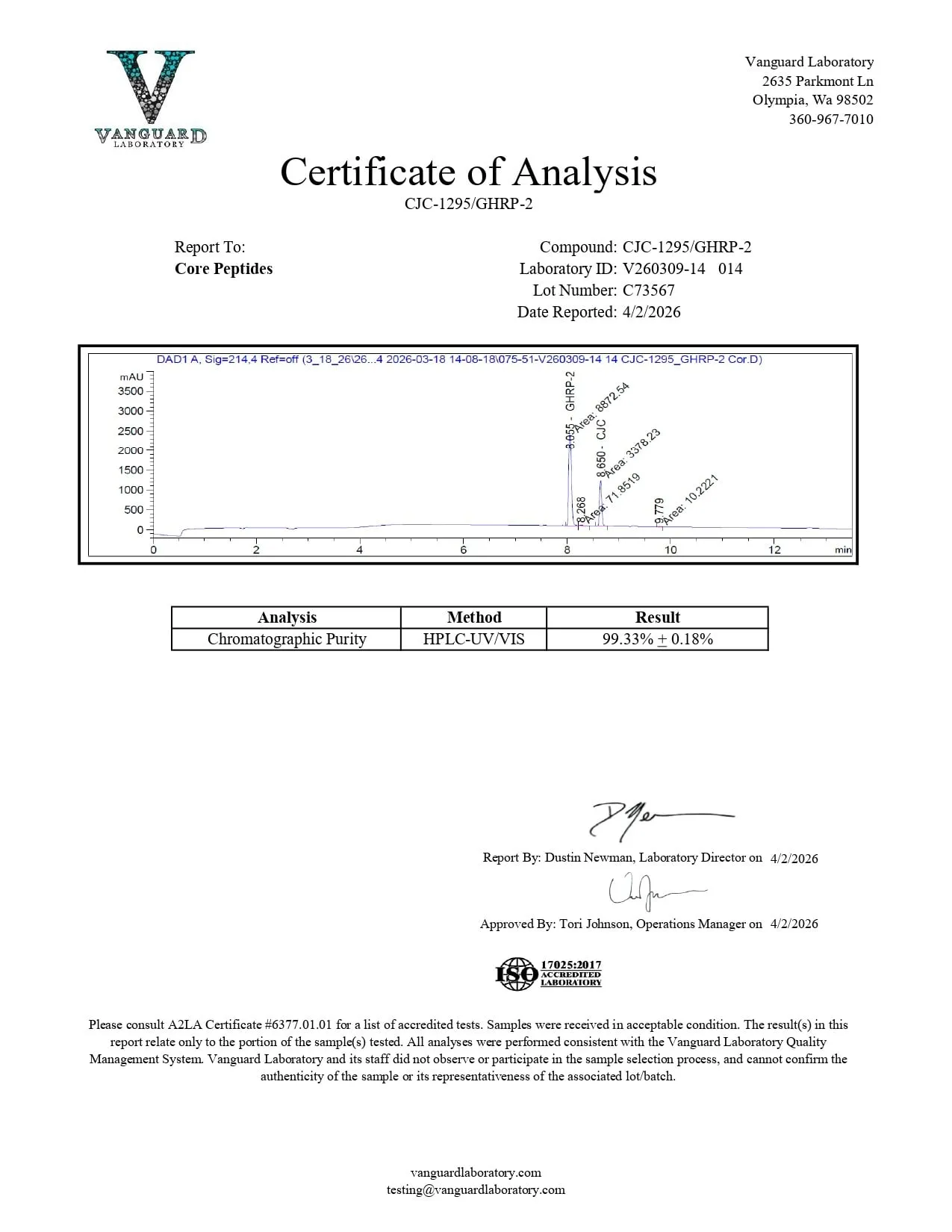
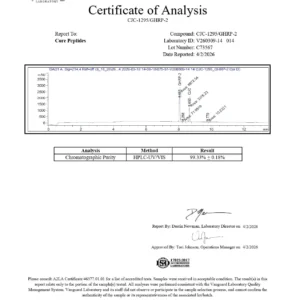
| Purity | >99% |
| SKU | CJC-1295-GHRP-2 |
CJC-1295 No DAC Component Profile
CJC-1295 exhibits binding affinity for the growth hormone-releasing hormone (GHRH) receptors in the anterior pituitary, potentially inducing GH release by pituitary somatotroph cells. It is derived from GHRH 1-29 — considered to represent the functional 29-amino-acid N-terminal sequence of GHRH — modified through tetrasubstitution to improve metabolic stability and receptor binding characteristics.
A key structural note: the cjc-1295 & ghrp-2 blend contains CJC-1295 No DAC — the formulation without the Drug Affinity Complex component. This means the CJC-1295 in this blend does not bind albumin and does not have the extended half-life characteristic of the DAC-modified version. The No DAC form produces a more acute GH release profile — appropriate for research protocols examining pulsatile GH axis stimulation patterns.
GHRH receptor activation by CJC-1295 initiates a cAMP-mediated intracellular signalling cascade — distinct from the calcium-dependent IP3 pathway activated by GHS-R1a engagement — providing mechanistic complementarity with the GHRP-2 component.
GHRP-2 Component Profile
GHRP-2 is a synthetic hexapeptide composed of six amino acids. Research teams have observed this peptide to bind to GHS-R1a receptors — also known as ghrelin receptors — present in both the hypothalamus and the pituitary gland. Through this receptor engagement, GHRP-2 stimulates GH production in pituitary somatotrophs that express the GHS-R1a receptor.
The dual anatomical distribution of GHS-R1a — both hypothalamic and pituitary — means GHRP-2’s GH-stimulating activity may involve both direct pituitary stimulation and indirect hypothalamic modulation of GHRH release. This mechanistic complexity distinguishes GHS-R1a agonists from pure GHRH receptor agonists and is relevant to research protocol design for the cjc-1295 & ghrp-2 blend.
GHRP-2’s ghrelin receptor agonism also produces appetite stimulation through hypothalamic circuits — an activity relevant to metabolic research contexts and a distinguishing feature from ipamorelin, which produces minimal appetite stimulation despite engaging the same receptor.
Dual-Receptor Research Rationale
The mechanistic rationale for the cjc-1295 & ghrp-2 combination is built on dual-receptor engagement through pharmacologically distinct intracellular signalling pathways.
CJC-1295 activates GHRHR — signalling through cAMP and protein kinase A (PKA). GHRP-2 activates GHS-R1a — signalling through inositol trisphosphate (IP3) and intracellular calcium mobilisation. These are mechanistically distinct and non-redundant pathways that produce GH secretion through different cellular mechanisms.
The co-activation of both pathways — through the simultaneous presence of both peptides in the cjc-1295 & ghrp-2 blend — is hypothesised to produce synergistic GH release from pituitary somatotrophs beyond the additive effect of each individual pathway. This dual-receptor synergy hypothesis has driven sustained research interest in GHRH receptor agonist / GHS-R1a agonist combination preparations.
GHRP-2 Benefits in Research Context
GHRP 2 benefits characterised in the research literature extend beyond GH secretagogue activity to encompass several additional biological domains relevant to the broader research utility of this blend.
GH-independent appetite and metabolic research reflects GHRP-2’s ghrelin receptor activity in hypothalamic circuits relevant to energy homeostasis — distinct from its pituitary GH-stimulating function. Tissue viability research has examined GHRP-2’s potential cytoprotective properties — capacity to reduce apoptosis in stressed tissue models. Cardiac function research has examined ghrelin receptor activity in myocardial tissue. Memory and cognitive function research has investigated hippocampal ghrelin receptor activity. Together, these additional research dimensions extend the blend’s utility beyond pure GH axis investigation.
Research Applications
This blend is investigated within the following approved in-vitro research domains:
- Dual-receptor GH secretagogue synergy research
- GHRH receptor and GHS-R1a simultaneous activation studies
- cAMP vs IP3/calcium pathway interaction investigation
- GH pulsatility and anterior pituitary secretion research
- IGF-1 axis modulation downstream of dual secretagogue stimulation
- Appetite regulation and hypothalamic ghrelin receptor research
- Tissue viability and cytoprotective mechanism investigation
- Cardiac function and myocardial ghrelin receptor research
- Metabolic rate and body composition investigation
Reconstitution and Storage
Reconstitute with sterile or bacteriostatic water following standard lyophilised peptide protocols. Store lyophilised powder at −20°C. Once reconstituted, maintain at 4°C and use within the timeframe specified by your research protocol. Protect from light and avoid repeated freeze-thaw cycles.
Explore additional GH secretagogue blend and individual compound research preparations in our Anti-Age, Muscle Growth and Weight Loss research categories.
FAQ
What is the CJC-1295 & GHRP-2 blend? The CJC-1295 & GHRP-2 blend is a 10mg lyophilised research preparation combining CJC-1295 No DAC / Mod GRF 1-29 (5mg) and GHRP-2 (5mg) in a single vial at >99% purity. CJC-1295 engages the GHRH receptor through cAMP-mediated signalling. GHRP-2 engages GHS-R1a through IP3/calcium signalling. These mechanistically distinct pathways are proposed to synergistically elevate GH release from anterior pituitary somatotrophs beyond the capacity of either peptide alone. For in-vitro scientific research only.
What are GHRP 2 benefits characterised in research? GHRP 2 benefits characterised in research include GH secretagogue activity through GHS-R1a agonism, appetite stimulation through hypothalamic ghrelin receptor engagement, tissue viability and cytoprotective properties, cardiac function and myocardial ghrelin receptor activity, memory and cognitive function investigation through hippocampal GHS-R1a, and metabolic rate investigation. These multi-domain benefits reflect the broad distribution of ghrelin receptors and provide the research rationale for GHRP-2’s inclusion in this dual-secretagogue blend.
Is CJC-1295 in this blend with or without DAC? CJC-1295 in this blend is the No DAC formulation — without the Drug Affinity Complex albumin-binding modification. This produces a more acute, pulsatile GH release profile compared to DAC-modified CJC-1295. The No DAC specification is confirmed by the blend’s SKU (CJC-1295-GHRP-2) and component contents (5mg CJC-1295 No DAC). Researchers designing protocols around sustained vs pulsatile GH stimulation should note this distinction when selecting between DAC and No DAC CJC-1295 preparations.
What makes the CJC-1295 & GHRP-2 blend synergistic in research? The synergistic research hypothesis for the cjc-1295 & ghrp-2 blend rests on dual-receptor engagement through non-redundant intracellular signalling pathways. CJC-1295 activates GHRHR via the cAMP-PKA cascade. GHRP-2 activates GHS-R1a via the IP3/intracellular calcium cascade. These are mechanistically distinct cellular signalling systems that produce GH secretion through different molecular mechanisms — simultaneous activation of both is proposed to produce a synergistic rather than simply additive GH release response.
How does the CJC-1295 & GHRP-2 blend differ from the triple blend with ipamorelin? The CJC-1295 & GHRP-2 blend is a dual-peptide preparation (5mg each, 10mg total) without ipamorelin. The triple blend adds ipamorelin as a second GHS-R1a agonist alongside GHRP-2. The dual blend is appropriate for research isolating the GHRHR/GHS-R1a synergy mechanism. The triple blend enables additional research into comparative GHS-R1a pharmacology between ipamorelin and GHRP-2 within the same GH secretagogue research framework. The choice between formats depends on the specific research question and protocol design.
2 reviews for CJC-1295 No DAC & GHRP-2 Blend 10mg
Add a review
Related products
Longevity and Anti-aging Research
Immunity Enhancement Research
Muscle Growth research
Healing and Regeneration research
Longevity and Anti-aging Research
Longevity and Anti-aging Research
Longevity and Anti-aging Research
Cognitive Enhancement Research
vorbelutr ioperbir –
I do not even know how I ended up here, but I thought this post was great. I don’t know who you are but certainly you are going to a famous blogger if you aren’t already 😉 Cheers!
zoritoler imol –
Attractive section of content. I just stumbled upon your weblog and in accession capital to assert that I acquire in fact enjoyed account your blog posts. Any way I will be subscribing to your augment and even I achievement you access consistently rapidly.