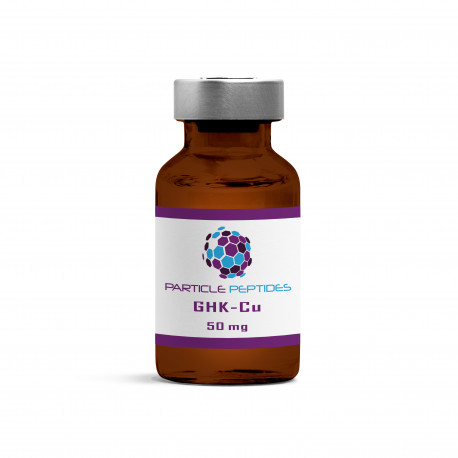
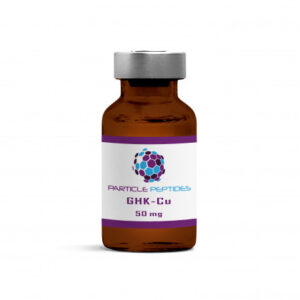
GHK-Cu (Copper Peptide) 50mg
$61.19
GHK-Cu Peptide 50mg — Definitive Copper Complex Research Compound
GHK-Cu peptide — the copper complex of the naturally occurring tripeptide glycyl-L-histidyl-L-lysine — is one of the most comprehensively researched copper-binding peptides in biomedical science. First identified in human plasma, this compact tripeptide coordinates a divalent copper ion (Cu²⁺) across its three amino acid residues to produce a biologically active complex with a research profile spanning wound healing, tissue regeneration, skin rejuvenation, anti-inflammatory biology, DNA repair and oncology research. Supplied as a lyophilised blue powder in a single 50mg vial with a verified purity of ≥99%, this compound represents the definitive research-grade GHK-Cu preparation for serious in-vitro investigation.
⚠️ Research Use Only. This product is intended exclusively for in-vitro scientific research. It is not approved for human or animal consumption, clinical use, or therapeutic application.
Table of Contents
- Product Specifications
- Copper Coordination Chemistry
- Tissue Repair and Regeneration Research
- Collagen, Elastin and ECM Synthesis
- Cell Protective and Anti-Inflammatory Research
- DNA Repair and Anti-Cancer Research
- Research Applications
- Reconstitution and Storage
- FAQ
Product Specifications
| Parameter | Detail |
|---|---|
| Peptide | GHK-Cu (Copper Peptide) |
| Sequence | Gly-His-Lys(Cu²⁺) |
| Quantity | 50mg |
| Unit | 1 Vial |
| Physical Appearance | Blue powder |
| Peptide Purity | ≥99% |
| Molecular Mass | 340.38 Da |
| CAS Number | 300801-03-0 |
Note: The characteristic blue colouration of this compound is a direct result of the copper ion coordination — not an impurity or quality issue. GHK-Cu in its copper-chelated form is blue by nature.
Copper Coordination Chemistry
derives its biological activity from the precise coordination of a Cu²⁺ ion by the amino acid residues of the Gly-His-Lys tripeptide. The histidine residue — through its imidazole nitrogen — plays the primary coordinating role, with additional coordination contributions from the glycine amine and the lysine side chain. This multi-dentate coordination produces a stable, biologically recognisable copper complex that behaves differently in cellular environments than free ionic copper.
The 50mg format of this cu50 peptide preparation provides a substantial research quantity suitable for extended investigation programmes, multiple assay series or studies requiring larger sample volumes — positioning it as the appropriate choice for research groups conducting sustained GHK-Cu investigation rather than preliminary screening work.
This coordination chemistry is directly relevant to GHK-Cu’s biological activity profile — the complexed form interacts with specific cellular receptors and matrix proteins in ways that are distinct from both the free peptide and free copper ions, producing a research compound with unique biological recognition properties.
Tissue Repair and Regeneration Research
The tissue repair research profile of ghk-cu peptide for sale in the scientific literature is one of the most extensively documented among naturally occurring peptides. Research has characterised GHK-Cu’s capacity to support repair and regeneration across multiple organ systems — skin, lung, bone, liver and stomach lining — reflecting the broad tissue distribution of its cellular targets.
Dermal fibroblast function is the most thoroughly investigated cellular mechanism. GHK-Cu has demonstrated capacity to stimulate fibroblast proliferation, migration and matrix production — the three cellular activities most critical to effective dermal wound repair. The compound’s effects on fibroblast function translate to improved tissue repair in research models examining both acute wound healing and chronic wound biology.
Blood vessel outgrowth stimulation — angiogenesis induction — is a secondary mechanism of significant research relevance. New vessel formation is essential to tissue repair and regeneration, providing the oxygen and nutrient delivery required for sustained healing. GHK-Cu’s investigated angiogenic properties make it a research compound of interest in any tissue repair context where vascularisation is a rate-limiting factor.
Nerve outgrowth stimulation has also been characterised — of particular research relevance in neural regeneration contexts and in wound healing models where re-innervation is necessary for complete functional recovery.
Collagen, Elastin and ECM Synthesis
Buy GHK-Cu research compound procurement is most frequently driven by its extensively characterised effects on extracellular matrix component synthesis — specifically the upregulation of collagen, elastin and glycosaminoglycan production in fibroblast research models.
Collagen synthesis stimulation is GHK-Cu’s most documented ECM effect — with research demonstrating increased Type I and Type III collagen production in dermal fibroblast models. These collagen types are the primary structural proteins of the dermis, and their enhanced synthesis translates to improved tissue tensile strength and wound repair quality in research frameworks.
Elastin upregulation provides a complementary benefit — elastin being the ECM protein responsible for tissue elasticity and recoil. Its reduction with age is a primary factor in the mechanical degradation of skin tissue, and GHK-Cu’s investigated elastin-stimulating activity is of direct relevance to skin aging research.
Glycosaminoglycan synthesis enhancement — including hyaluronic acid — adds a third dimension to GHK-Cu’s ECM research profile, affecting tissue hydration, matrix organisation and the cellular microenvironment that supports optimal fibroblast function.
Cell Protective and Anti-Inflammatory Research
Beyond tissue repair and ECM synthesis, demonstrates a powerful cell-protective research profile across several mechanistic domains.
NFκB suppression is among the most significant findings — NFκB is a central transcription factor in inflammatory and aging-related gene expression, and its suppression by GHK-Cu is investigated as a mechanism by which the compound may reduce both inflammatory tissue damage and age-associated gene expression changes. This makes GHK-Cu relevant to both acute anti-inflammatory research and chronic aging biology investigation.
Proteasome system enhancement — the cellular mechanism responsible for identifying and eliminating damaged or misfolded proteins — has been characterised as a GHK-Cu activity. Enhanced proteasome function is of research relevance to both aging biology and protein quality control in stressed or damaged tissue.
Lung protection research has examined GHK-Cu’s potential to mitigate oxidative and inflammatory damage in lung tissue models — an application area of growing research interest given the compound’s broad tissue protective activity profile.
DNA Repair and Anti-Cancer Research
The DNA repair enhancement activity of buy ghk-cu research compounds adds a mechanistically distinct dimension to an already broad research profile. Research has characterised GHK-Cu’s capacity to upregulate expression of DNA repair genes — a property of direct relevance to research examining genomic stability maintenance in aging tissue and oxidative stress-exposed cellular environments.
Anti-cancer research has investigated GHK-Cu across multiple cancer biology contexts — examining its effects on tumour cell proliferation, apoptotic pathway activation and the anti-inflammatory mechanisms proposed to reduce cancer-permissive tissue microenvironments. These investigations reflect GHK-Cu’s multi-pathway biology rather than a single direct anti-tumour mechanism.
Research Applications
investigated within the following approved in-vitro research domains:
- Wound healing and dermal fibroblast function studies
- Collagen, elastin and glycosaminoglycan synthesis research
- Angiogenesis and blood vessel outgrowth investigation
- Nerve outgrowth and neural regeneration research
- Tissue repair in skin, lung, bone, liver and gastric models
- NFκB pathway suppression and anti-inflammatory research
- Proteasome system enhancement and cell cleansing studies
- DNA repair gene upregulation research
- Anti-cancer mechanism investigation
- Skin aging and ECM degradation biology
- Lung protection and respiratory tissue research
Reconstitution and Storage
GHK-Cu is a copper-chelated peptide. Reconstitute with sterile or bacteriostatic water. The characteristic blue colouration of the powder will be visible in the reconstituted solution — this is expected and confirms the copper coordination is intact.
Store lyophilised powder at −20°C protected from light. Once reconstituted, maintain at 4°C and use within the timeframe specified by your research protocol. Avoid copper-chelating agents in reconstitution buffers as these may displace the coordinated Cu²⁺ and alter the biological activity of the compound.
Explore additional anti-aging and tissue repair research compounds in our Anti-Age, Healing and Longevity and Anti-Age research categories.
What is GHK-Cu peptide? GHK-Cu peptide is the copper complex of glycyl-L-histidyl-L-lysine — a naturally occurring tripeptide found in human plasma. The Cu²⁺ ion is coordinated across the three amino acid residues to produce a biologically active complex researched for wound healing, tissue regeneration, collagen and elastin synthesis, angiogenesis, nerve outgrowth, NFκB suppression, DNA repair enhancement, proteasome function and anti-cancer biology. Supplied as a 50mg lyophilised blue powder with ≥99% purity for in-vitro scientific research.
Why is GHK-Cu peptide blue? The blue colouration of GHK-Cu powder is a direct result of the Cu²⁺ ion coordination within the peptide complex. Copper in its divalent ionic state characteristically imparts blue colouration to compounds and solutions in which it is chelated — this is a fundamental property of copper coordination chemistry, not an impurity or quality issue. The blue appearance of the cu50 peptide preparation confirms that the copper coordination is intact in the lyophilised material.
Where can I buy GHK-Cu? Buy GHK-Cu options are available through specialist research peptide suppliers. This compound is supplied strictly for in-vitro scientific research. It is not approved for human consumption, therapeutic use or clinical application. Researchers should ensure compliance with all applicable institutional and regulatory requirements when procuring and using this compound.
What is GHK-Cu peptide injection in research? peptide injection as a research administration method refers to its characterised use in in-vivo preclinical models where subcutaneous and intradermal administration routes have been examined. In-vitro research involving GHK-Cu typically uses dissolved preparations applied to cell culture systems. This product is supplied for in-vitro research use only — administration of this compound in human subjects falls outside its intended research use.
How does GHK-Cu differ from AHK-Cu? (glycine-histidine-lysine copper) and AHK-Cu (alanine-histidine-lysine copper) are both naturally occurring copper-coordinated tripeptides present in plasma, but they differ in N-terminal amino acid composition. Glycine in GHK-Cu versus alanine in AHK-Cu produces distinct copper coordination geometry and different cellular receptor interaction profiles. Research has characterised both compounds for hair growth, skin tissue and fibroblast biology — with GHK-Cu having the more extensive published research profile of the two.
What makes the 50mg format research-significant? The 50mg quantity of this peptide preparation provides a substantially larger research supply than standard 5–10mg peptide vials — appropriate for extended research programmes, multiple experimental series, larger-scale cell culture studies or longitudinal investigations requiring consistent batch material. For research groups conducting serious GHK-Cu investigation rather than preliminary screening, the 50mg format ensures batch consistency across the full duration of a study programme.
1 review for GHK-Cu (Copper Peptide) 50mg
Add a review
Related products
Core Peptides
Core Peptides
Core Peptides
Healing and Regeneration research
Cognitive Enhancement Research
Healing and Regeneration research
Core Peptides
Healing and Regeneration research
vorbelutr ioperbir –
Greetings! I’ve been following your blog for a while now and finally got the courage to go ahead and give you a shout out from Lubbock Texas! Just wanted to mention keep up the great work!