
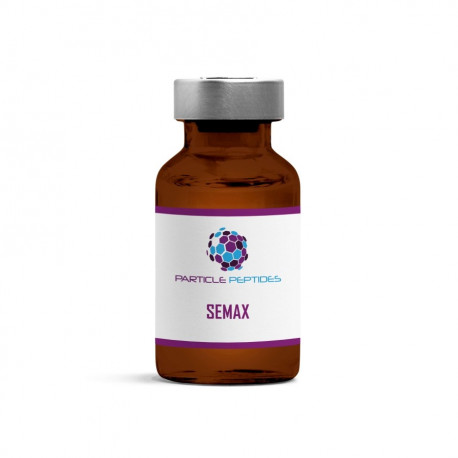
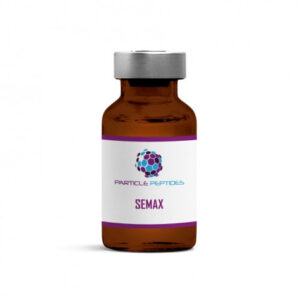
Semax 10mg
$34.99
Semax Peptide 10mg — Powerful Neuroprotective Research Compound
Semax peptide is a synthetic heptapeptide derivative of adrenocorticotropic hormone (ACTH) — specifically a modified fragment of the ACTH(4-10) sequence — developed at the Institute of Molecular Genetics in Russia during the 1980s. It has demonstrated nootropic, neuroprotective and neurorestorative properties across extensive preclinical and clinical research, with particular investigation into acute cerebral hypoxia recovery, cognitive disorder treatment and neurological disease research. Supplied as a lyophilised white powder in a single 10mg vial with a verified purity of ≥99%, this compound is manufactured to the exacting standards required for in-vitro scientific research.
⚠️ Research Use Only. This product is intended exclusively for in-vitro scientific research. It is not approved for human or animal consumption, clinical use, or therapeutic application.
Table of Contents
- Product Specifications
- ACTH Derivation and Structural Context
- Neuroprotective Mechanism Research
- Cognitive Enhancement Research
- Neurological Disease Research
- Research Applications
- Reconstitution and Storage
- FAQ
Product Specifications
| Parameter | Detail |
|---|---|
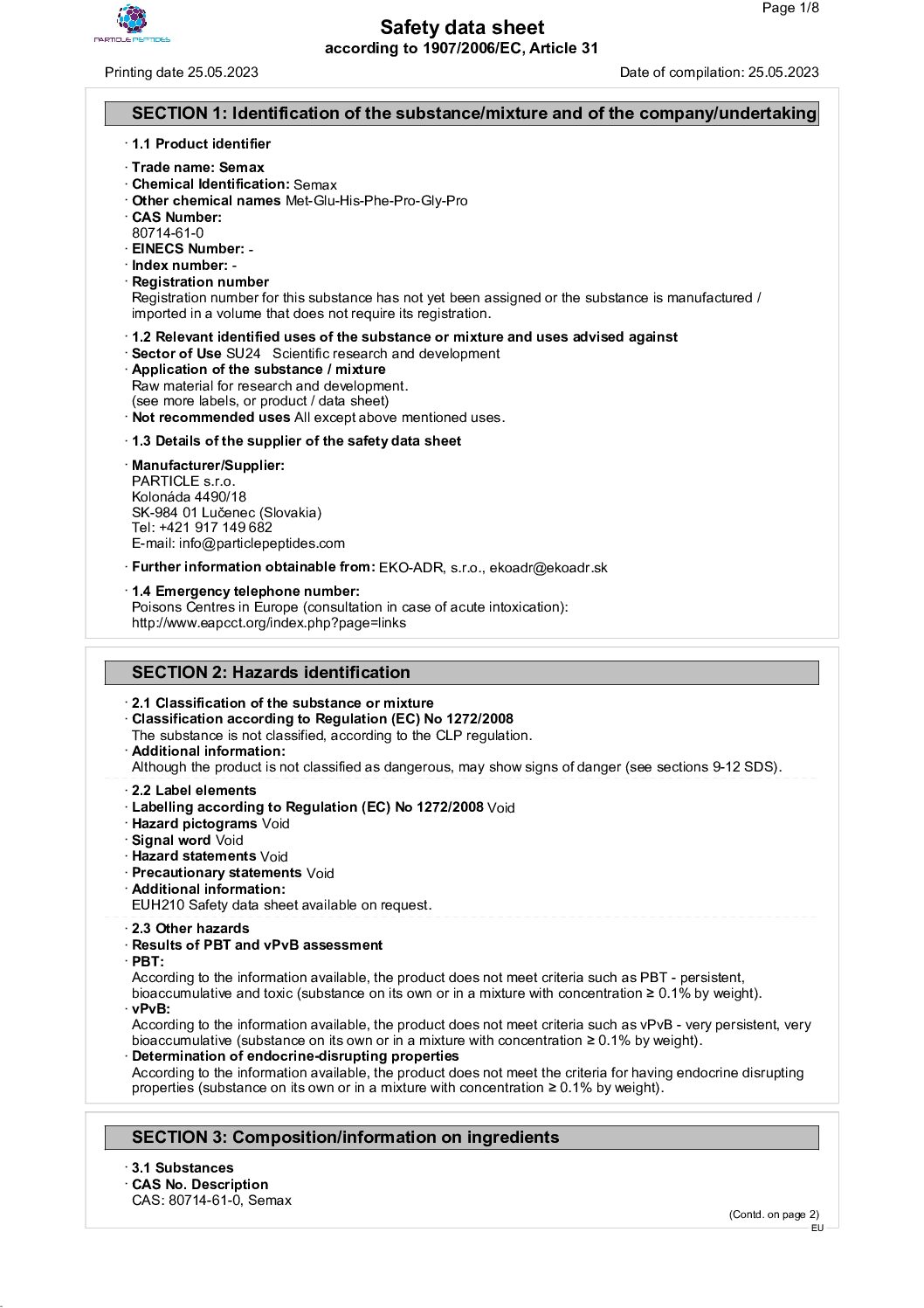
| Peptide | Semax |
| Derivation | ACTH (Adrenocorticotropic Hormone) Fragment |
| Quantity | 10mg |
| Unit | 1 Vial |
| Physical Appearance | White powder |
| Salt Form | Acetate |
| Peptide Purity | ≥99% |
| Molecular Mass | 813.92 Da |
| CAS Number | 80714-61-0 |
| Solubility | NaCl / Sterile / Bacteriostatic water — 1ml/vial |
| Sequence | Met-Glu-His-Phe-Pro-Gly-Pro |
ACTH Derivation and Structural Context
Semax 10mg originates from a modified fragment of adrenocorticotropic hormone — specifically the ACTH(4-10) sequence — which was identified in research as the region of ACTH responsible for its central nervous system and cognitive effects, independent of its adrenal axis activity. By isolating and modifying this fragment, researchers at the Institute of Molecular Genetics produced a compound that retains the neurological activity of the parent hormone without the adrenocortical stimulation that would limit its CNS research utility.
The structural modifications introduced during development — including a Pro-Gly-Pro C-terminal extension that mirrors the strategy used in selank development — enhance the metabolic stability of the peptide fragment relative to native ACTH(4-10), extending the effective research window and improving preclinical model utility.
Neuroprotective Mechanism Research
The neuroprotective properties of semax for sale research compounds have been characterised across multiple injury and degeneration models. Research has identified several mechanistic pathways through which semax exerts neuroprotective activity.
BDNF (brain-derived neurotrophic factor) upregulation is a primary neuroprotective mechanism under investigation — semax has demonstrated capacity to increase BDNF expression in hippocampal and cortical tissue, with BDNF’s well-established role in neuronal survival, synaptic plasticity and neuroprotection against ischaemic injury providing direct mechanistic relevance.
Acute cerebral hypoxia protection research has examined semax’s potential to reduce neuronal death in ischaemic and hypoxic injury models — including stroke and traumatic brain injury paradigms — where rapid neuronal loss is the primary pathological mechanism requiring intervention.
Neuroinflammation modulation has also been investigated — with research characterising semax’s effects on microglial activation and inflammatory cytokine expression in neurological disease models.
Cognitive Enhancement Research
What is semax in cognitive research contexts is best understood through its investigated effects on BDNF-mediated synaptic plasticity, monoamine neurotransmitter modulation and attention-related neural network function.
Memory and learning research has characterised improvements in acquisition and retrieval parameters in preclinical models — with mechanisms proposed involving both BDNF upregulation and direct modulation of hippocampal cholinergic and dopaminergic signalling.
Attention and processing speed research has examined semax’s utility in ADHD-adjacent research models — investigating whether its neurotransmitter modulation properties translate to improvements in attention-related behavioural parameters.
Immunity boosting research has also been conducted — reflecting ACTH’s established role in immune-neuroendocrine crosstalk — with semax demonstrating capacity to modulate immune cell function in research models examining the neuroimmunomodulatory properties of ACTH-derived peptides.
Neurological Disease Research
What is semax peptide used for in neurological disease research spans several pathology areas.
Stroke recovery research has investigated semax’s capacity to support neurological recovery in post-ischaemic models — examining functional outcome parameters, neuronal survival and neuroinflammatory resolution.
Traumatic brain injury research has examined similar neuroprotective mechanisms in mechanical injury models.
Alzheimer’s disease and cognitive disorder research has investigated whether semax’s BDNF-upregulating and anti-neuroinflammatory properties have utility in neurodegenerative disease models.
Depression research has examined monoaminergic modulation mechanisms relevant to depressive pathology — with serotonin, dopamine and noradrenaline pathway effects all characterised in preclinical frameworks.
Research Applications
Semax is investigated within the following approved in-vitro research domains:
- BDNF upregulation and synaptic plasticity research
- Acute cerebral hypoxia and stroke recovery investigation
- Traumatic brain injury neuroprotection research
- Cognitive enhancement and nootropic mechanism studies
- Memory acquisition, consolidation and retrieval research
- Alzheimer’s disease and neurodegeneration model investigation
- Depression and monoamine neurotransmitter modulation
- ADHD-related attention and processing research
- Neuroinflammation and microglial activation studies
- Immune-neuroendocrine crosstalk investigation
Reconstitution and Storage
Reconstitute with NaCl, sterile water or bacteriostatic water at 1ml per vial. Add solvent slowly along the vial wall and allow to dissolve by gentle rotation. Do not shake or vortex.
Store lyophilised powder at −20°C. Once reconstituted, maintain at 4°C and use within the timeframe specified by your research protocol. Protect from light and avoid repeated freeze-thaw cycles.
Explore additional nootropic and neuroprotective research compounds in our Cognitive, Anti-Age and Healing research categories.
FAQ
What is semax peptide? Semax peptide is a synthetic heptapeptide derivative of ACTH(4-10) developed at the Institute of Molecular Genetics in Russia. It demonstrates nootropic, neuroprotective and neurorestorative properties across preclinical and clinical research. Primary research applications include acute cerebral hypoxia recovery, stroke and traumatic brain injury models, cognitive disorder investigation, depression research and Alzheimer’s disease model studies. Supplied as a 10mg lyophilised white powder with ≥99% purity for in-vitro scientific research.
What is semax 10mg used for in research? Semax 10mg research applications include BDNF upregulation and synaptic plasticity investigation, acute cerebral hypoxia and stroke recovery research, traumatic brain injury neuroprotection, cognitive enhancement mechanism studies, memory and learning research, Alzheimer’s disease model investigation, depression and monoamine neurotransmitter research, ADHD-adjacent attention studies and neuroinflammation investigation. All applications are within approved in-vitro and preclinical frameworks.
Is semax for sale for human use? Semax for sale through this platform is supplied exclusively for in-vitro scientific research. It is not approved for human administration, therapeutic use or clinical application. All research involving this compound should comply with applicable institutional and regulatory requirements.
What is semax peptide bodybuilding relevance in research? Semax peptide bodybuilding research interest typically focuses on its neuroprotective and cognitive enhancement properties — particularly BDNF upregulation and its potential effects on neural recovery, motivation and focus in athletic training contexts. Additionally, semax’s investigated immune-boosting properties derived from its ACTH lineage are relevant to research on immune-neuroendocrine crosstalk in exercise physiology. This compound is for in-vitro research use only and is not approved for human administration.
What is semax injection protocol in research? Semax injection as a research administration method refers to its characterised use in preclinical in-vivo research models — where intranasal and subcutaneous administration routes have been examined. The compound’s relatively small molecular mass and documented CNS penetration make multiple administration routes relevant for research investigation. This product is supplied for in-vitro research use only — semax injection in human subjects falls outside the intended use of this research compound.
What is semax and how does it differ from selank? Semax is an ACTH-derived synthetic peptide with primary neuroprotective and nootropic properties — focussed on BDNF upregulation, neuroinflammation modulation and acute neurological injury research. Selank is a tuftsin-derived synthetic peptide with primary anxiolytic and immunomodulatory properties — focussed on serotonin metabolism, monoamine modulation and anxiety disorder research. Both were developed at the Institute of Molecular Genetics in Russia and share nootropic research applications, but their mechanistic foundations and primary research domains are distinct.
2 reviews for Semax 10mg
Add a review
Related products
Longevity and Anti-aging Research
Longevity and Anti-aging Research
Particle Peptides
Weight Loss Research
Weight Loss Research
Longevity and Anti-aging Research
Immunity Enhancement Research
Cognitive Enhancement Research
vorbelutr ioperbir –
You have mentioned very interesting points! ps nice internet site.
zoritoler imol –
You have noted very interesting points! ps nice website . “The length of a film should be directly related to the endurance of the human bladder.” by Alfred Hitchcock.