
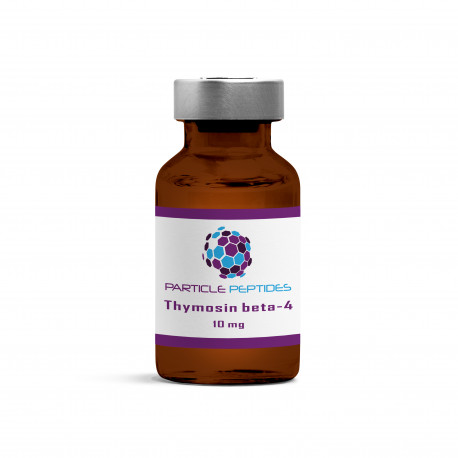
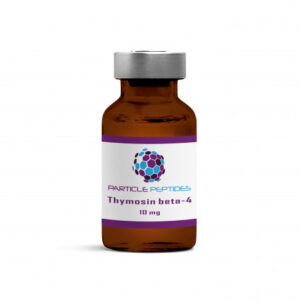
Thymosin Beta-4 (TB-500) 10mg
€71.99
TB-500 For Sale — Proven Tissue Repair Research Peptide 10mg
TB-500 for sale in research-grade form designates the synthetic version of Thymosin Beta-4 (Tβ4) — a naturally occurring 43-amino-acid peptide with a fundamental role in tissue repair and regeneration biology. Released by platelets, macrophages and multiple other cell types in response to injury, this peptide binds actin and promotes the cell migration, differentiation and new vessel formation processes that underpin effective tissue healing across multiple organ systems. Supplied as a lyophilised white powder in a single 10mg vial with a verified purity of ≥98%, this compound is formulated to the precise standards required for in-vitro scientific research.
⚠️ Research Use Only. This product is intended exclusively for in-vitro scientific research. It is not approved for human or animal consumption, clinical use, or therapeutic application.
Table of Contents
- Product Specifications
- TB-500 vs TB4 — Naming Clarification
- Actin Binding and Cell Migration Mechanism
- Tissue Repair and Regeneration Research
- Cardiovascular and Neurological Research
- Anti-Inflammatory Research
- Research Applications
- Reconstitution and Storage
- FAQ
Product Specifications
| Parameter | Detail |
|---|---|
| Peptide | Thymosin Beta-4 (TB-500 / Tβ4) |
| Quantity | 10mg |
| Unit | 1 Vial |
| Physical Appearance | White powder |
| Salt Form | Acetate |
| Peptide Purity | ≥98% |
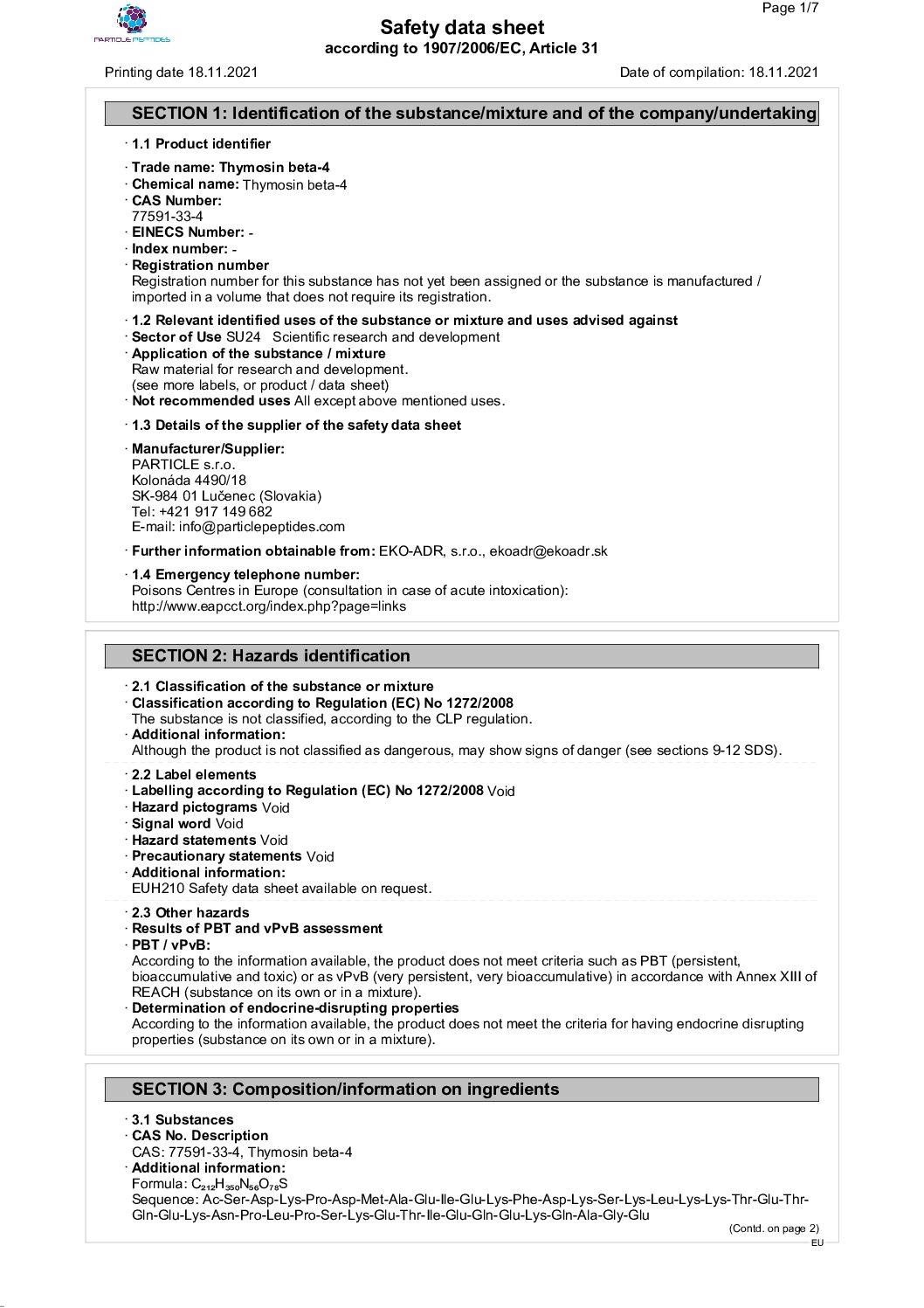
| Molecular Mass | 4,963.5 Da |
| CAS Number | 77591-33-4 |
| Solubility | NaCl / Sterile / Bacteriostatic water — 1ml/vial |
| Sequence | Ac-Ser-Asp-Lys-Pro-Asp-Met-Ala-Glu-Ile-Glu-Lys-Phe-Asp-Lys-Ser-Lys-Leu-Lys-Lys-Thr-Glu-Thr-Gln-Glu-Lys-Asn-Pro-Leu-Pro-Ser-Lys-Glu-Thr-Ile-Glu-Gln-Glu-Lys-Gln-Ala-Gly-Glu-Ser |
TB-500 vs TB4 — Naming Clarification
A frequently encountered point of confusion in this research area involves the relationship between thymosin tb 500, TB4 and related designations. This section provides authoritative clarification.
Thymosin Beta-4 (Tβ4) is the naturally occurring 43-amino-acid peptide found endogenously in virtually all human cells and tissues. It is the complete, full-length biological molecule.
TB-500 is the synthetic research preparation of Thymosin Beta-4 — identical in amino acid sequence and structure to the natural Tβ4 molecule. The “500” designation arose in research and commercial contexts to distinguish the synthetic preparation from the natural peptide, but both refer to the same molecular entity.
TB4-frag typically refers to specific fragment preparations of Thymosin Beta-4 — shorter peptide sequences derived from the Tβ4 molecule that retain specific biological activities. The most commonly researched fragment is the actin-binding tetrapeptide Ac-SDKP, which retains anti-inflammatory properties.
The tb500 vs tb4 distinction is therefore more terminological than chemical — both TB-500 and Tβ4 are the same 43-amino-acid sequence, with TB-500 simply designating the synthetic research preparation.
The thymosin beta 4 vs tb-500 comparison similarly resolves to the same compound — researchers should note that product purity, sequence verification and batch testing remain the critical variables to assess when selecting between suppliers rather than the naming convention used.
Actin Binding and Cell Migration Mechanism
The primary mechanistic foundation of tb 500 buy research interest is Thymosin Beta-4’s actin-binding activity. Tβ4 is one of the most abundant intracellular proteins in mammalian cells, where it functions as a G-actin (monomeric actin) sequestering protein — regulating the balance between monomeric G-actin and polymeric F-actin (filamentous actin) within the cell.
This actin regulation has direct consequences for cell motility and migration — processes fundamental to tissue repair. Cell migration requires the dynamic remodelling of the actin cytoskeleton, and Tβ4’s modulation of actin polymerisation provides the molecular basis for its investigated effects on the cell migration that drives wound healing, angiogenesis and tissue regeneration.
Stem and progenitor cell differentiation promoted by Tβ4 actin pathway modulation represents a secondary mechanism of research relevance — with the formation of new blood vessels and tissue regeneration from stem cell populations both dependent on the actin dynamics that Tβ4 regulates.
Tissue Repair and Regeneration Research
The tissue repair research profile of tb4-frag 500 and full-length Tβ4 encompasses multiple organ system models.
Wound healing research has characterised Tβ4’s capacity to accelerate epithelial repair, reduce apoptosis at wound sites and modulate the inflammatory phase of healing toward resolution. The combination of anti-apoptotic, anti-inflammatory and cell migration-promoting activities produces a multi-mechanism research profile directly relevant to both acute and chronic wound biology.
Multiple organ system repair has been investigated — with research examining Tβ4’s potential utility in skin, heart, central nervous system and corneal tissue repair models. This broad tissue applicability reflects the compound’s endogenous presence and activity across virtually all tissue types.
Cardiovascular and Neurological Research
Cardiovascular research involving TB-500 has examined Thymosin Beta-4’s potential cardioprotective effects in cardiac injury models — including ischaemia-reperfusion injury contexts where rapid cardiomyocyte death is the primary pathological mechanism.
The angiogenic activity of Tβ4 — promoting new vessel formation through endothelial cell migration and differentiation — provides a mechanistic basis for its cardiovascular research relevance beyond direct cardioprotection.
Neurological research has investigated Tβ4’s neuroprotective and neurorestorative potential in models of traumatic brain injury, stroke and neurodegenerative conditions — with proposed mechanisms involving both anti-inflammatory activity and the promotion of neural cell migration and regeneration.
Anti-Inflammatory Research
Thymosin Beta-4’s anti-inflammatory properties have been characterised across multiple research models. The compound reduces microbial growth inhibition and inflammatory cytokine expression in injury models — contributing to an inflammatory microenvironment conducive to healing rather than chronic pathology.
The anti-apoptotic activity of Tβ4 in injured tissue represents a mechanistically distinct anti-inflammatory contribution — preserving cell viability in the inflammatory environment of acute injury reduces secondary cell death that amplifies inflammatory signalling and prolongs healing time.
Research Applications
TB-500 / Thymosin Beta-4 is investigated within the following approved in-vitro research domains:
- Actin binding and cell migration mechanism studies
- Wound healing and tissue repair biology
- Angiogenesis and new vessel formation research
- Stem and progenitor cell differentiation investigation
- Anti-apoptotic pathway research
- Anti-inflammatory cytokine modulation
- Cardiovascular ischaemia-reperfusion injury models
- Neurological repair and neuroprotection research
- Corneal tissue repair investigation
- Microbial growth inhibition in wound biology models
Reconstitution and Storage
Reconstitute with NaCl, sterile water or bacteriostatic water at 1ml per vial. Add solvent slowly along the vial wall and allow to dissolve by gentle rotation. Do not shake or vortex.
Store lyophilised powder at −20°C. Once reconstituted, maintain at 4°C and use within the timeframe specified by your research protocol. Protect from light and avoid repeated freeze-thaw cycles.
Explore additional tissue repair and regeneration research peptides in our Healing, Anti-Age and Immunity research categories.
FAQ
What is TB-500 for sale? TB-500 for sale is the synthetic research preparation of Thymosin Beta-4 — a naturally occurring 43-amino-acid peptide with a fundamental role in tissue repair and regeneration. Released by platelets and macrophages in response to injury, it binds actin, promotes cell migration and differentiation, stimulates angiogenesis and reduces apoptosis and inflammation. Research applications span wound healing, cardiovascular, neurological and multi-organ tissue repair biology. Supplied as a 10mg lyophilised white powder with ≥98% purity for in-vitro scientific research.
What is the difference between thymosin beta 4 vs TB-500? Thymosin beta 4 vs TB-500 is more a naming distinction than a chemical one. Thymosin Beta-4 (Tβ4) is the natural 43-amino-acid peptide. TB-500 is the synthetic research preparation of the same molecule — identical in sequence and structure. The “500” designation arose in research and commercial contexts to distinguish the synthetic preparation. Both refer to the same compound for research purposes.
What is tb500 vs tb4 in practical research terms? TB500 vs tb4 for practical research purposes resolves to the same compound — the 43-amino-acid Thymosin Beta-4 sequence. When comparing products designated TB-500 or TB4 from different suppliers, the variables that matter are purity specification, sequence verification documentation and batch testing — not the naming convention used.
What is tb4-frag 500 and how does it differ? TB4-frag refers to specific fragment preparations of the full Thymosin Beta-4 sequence — shorter peptide sequences derived from Tβ4 that retain specific biological activities. The most commonly researched fragment is the actin-binding tetrapeptide Ac-SDKP. TB4-frag preparations are structurally distinct from full-length TB-500 and should not be used interchangeably in research protocols designed for the complete 43-amino-acid sequence.
What is thymosin TB 500 used for in research? Thymosin TB 500 is used in approved in-vitro research examining actin binding and cell migration, wound healing and tissue repair, angiogenesis and vessel formation, stem cell differentiation, anti-apoptotic pathway investigation, anti-inflammatory cytokine modulation, cardiovascular ischaemia-reperfusion models, neurological repair and corneal tissue biology. All applications are within approved in-vitro and preclinical research frameworks.
Where can I buy TB-500? TB 500 buy options are available through specialist research peptide suppliers. This compound is supplied strictly for in-vitro scientific research. It is not approved for human consumption, therapeutic use or clinical application. Researchers should ensure compliance with all applicable institutional and regulatory requirements.
4 reviews for Thymosin Beta-4 (TB-500) 10mg
Add a review
Related products
Weight Loss Research
Healing and Regeneration research
Weight Loss Research
Immunity Enhancement Research
Longevity and Anti-aging Research
Core Peptides
Cognitive Enhancement Research
Healing and Regeneration research
vorbelutr ioperbir –
I think other web-site proprietors should take this website as an model, very clean and wonderful user genial style and design, as well as the content. You are an expert in this topic!
zoritoler imol –
You have brought up a very excellent points, appreciate it for the post.
zimerov ertover –
Wow, amazing blog structure! How lengthy have you been blogging for? you made running a blog glance easy. The whole glance of your web site is magnificent, let alone the content!
arderborelnot –
Some truly nice stuff on this web site, I like it.