

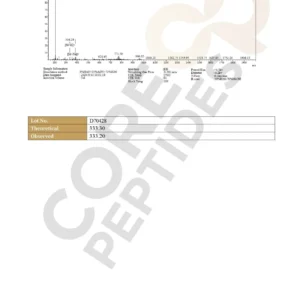
Cartalax (AED / T-31) 20mg
€56.70
Cartalax Peptide 20mg — Proven Khavinson Anti-Aging Bioregulator
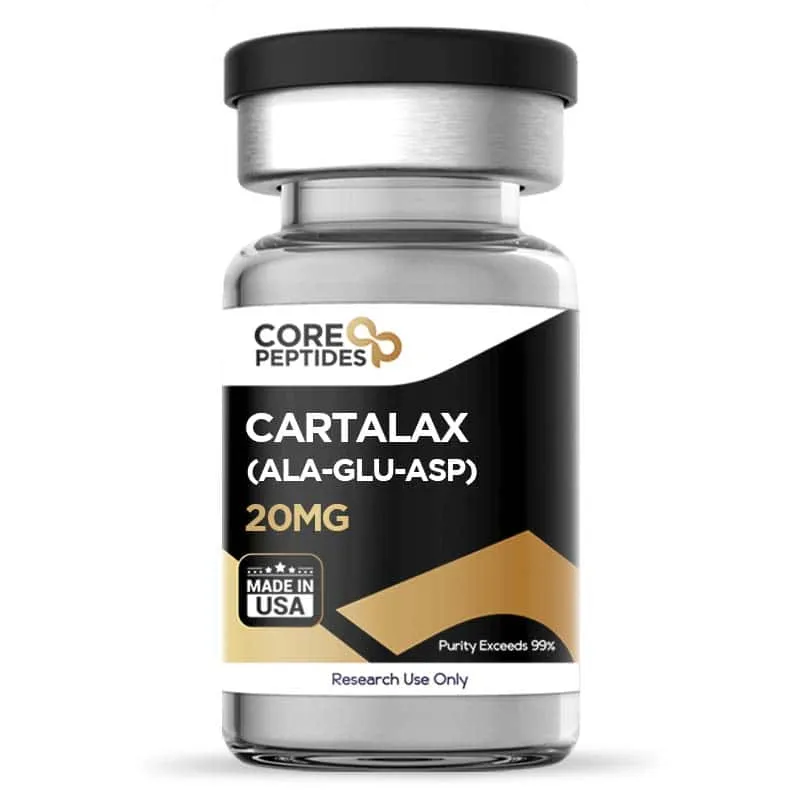
Cartalax peptide — also designated AED or T-31 — is a synthetic peptide classified among the Khavinson bioregulators and designed to target specific biological pathways with implications in cellular aging. Its amino acid sequence (Alanine-Glutamate-Aspartate — hence AED) is derived from the alpha-1 chain of Type XI collagen and has additionally been isolated from kidney extracts containing polypeptides. As a Khavinson bioregulator, Cartalax is suggested to act as a short signalling peptide capable of modulating biological processes including inflammation and cartilage repair — factors of direct significance in osteoarthritis and age-related cartilage degradation research. Supplied as a lyophilised powder in a single 20mg vial with a verified purity of >99%, this compound is manufactured for in-vitro scientific research.
⚠️ Research Use Only. This product is intended exclusively for in-vitro scientific research. It is not approved for human or animal consumption, clinical use, or therapeutic application.
Table of Contents
- Product Specifications
- Type XI Collagen Derivation and Structural Context
- Khavinson Bioregulator Mechanism
- Cartilage and Osteoarthritis Research
- Cellular Aging Research
- Research Applications
- Reconstitution and Storage
- FAQ
Product Specifications
| Parameter | Detail |
|---|---|
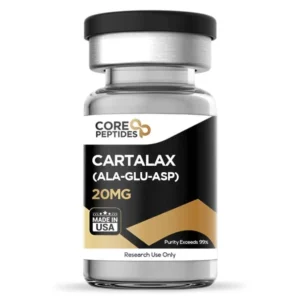
| Peptide | Cartalax (AED / T-31) |
| Sequence | Alanine-Glutamate-Aspartate |
| Source | Alpha-1 chain of Type XI collagen |
| Classification | Khavinson Bioregulator Peptide |
| Quantity | 20mg |
| Unit | 1 Vial |
| Form | Lyophilised powder |
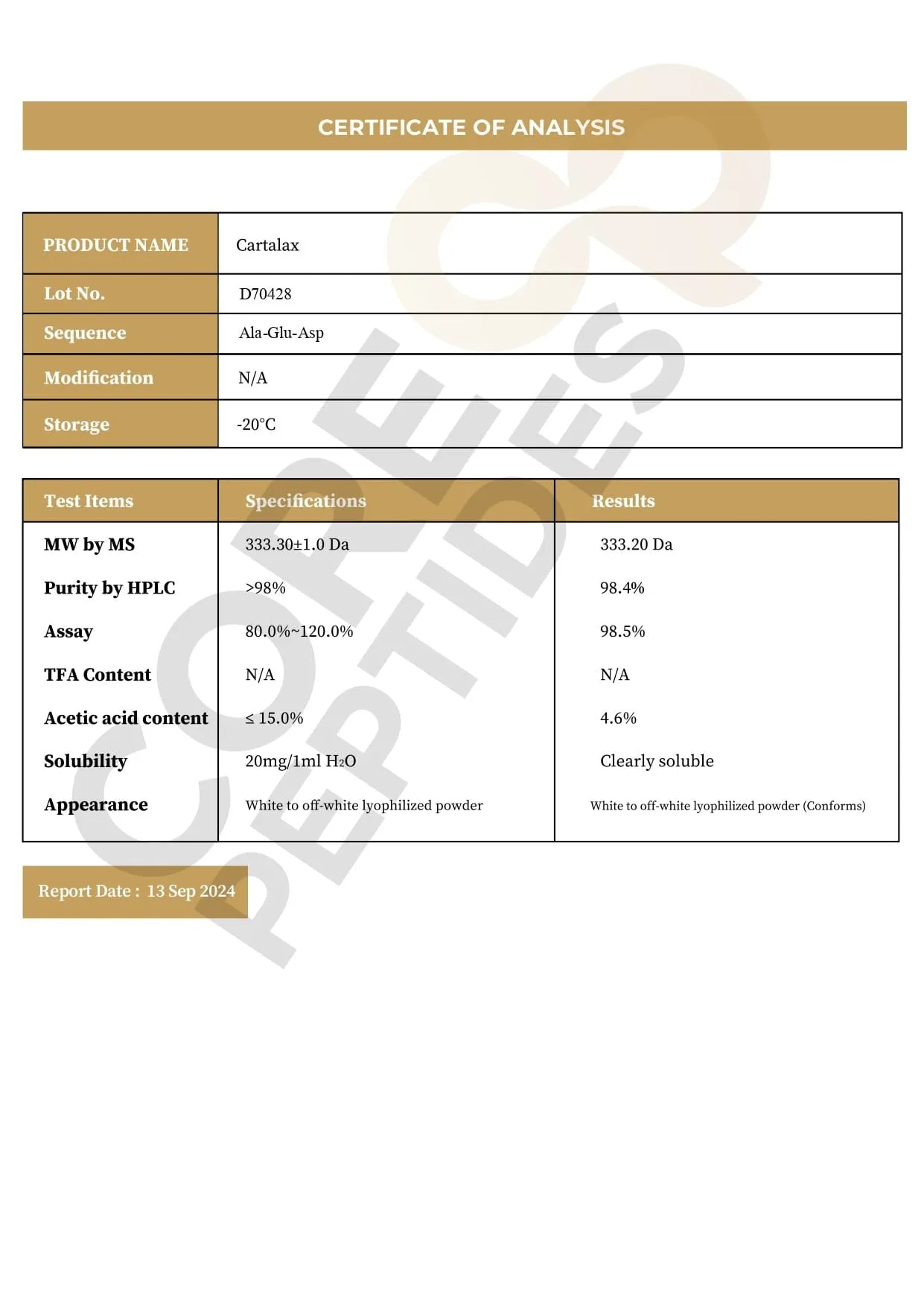
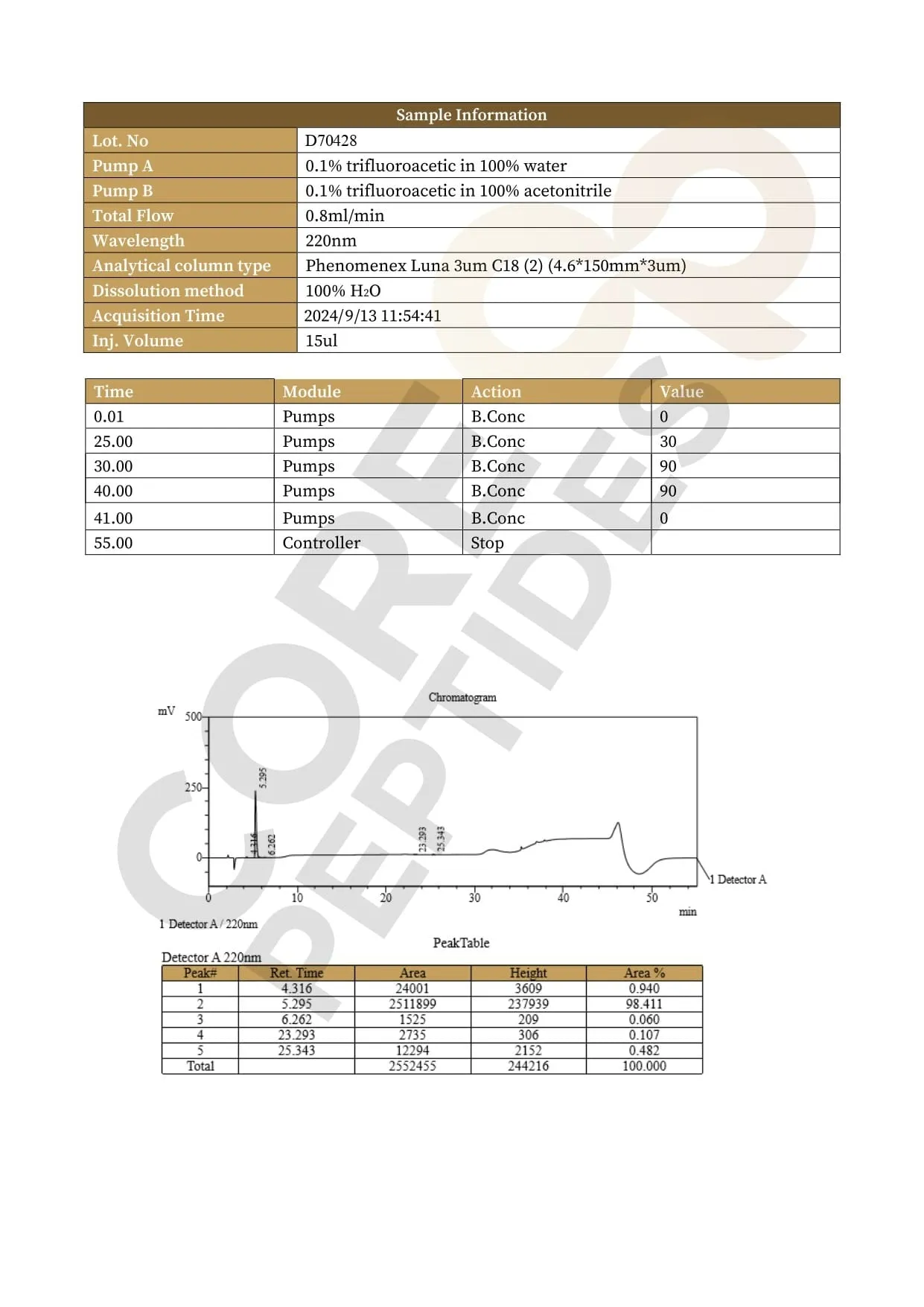
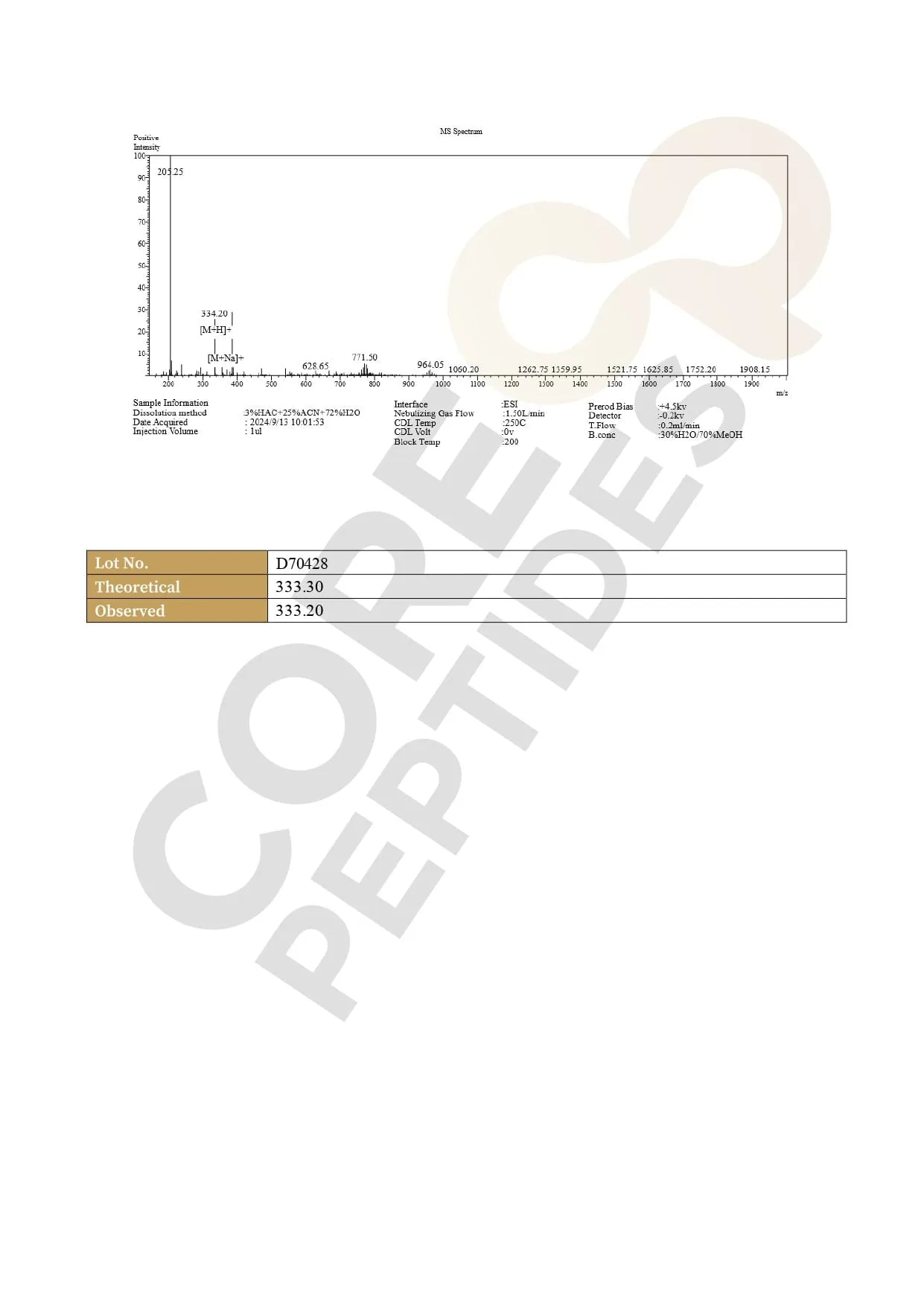
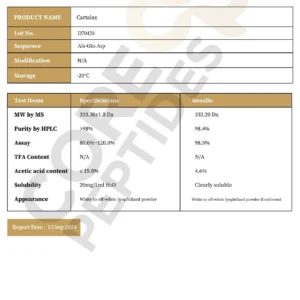
| Purity | >99% |
| SKU | P-CARLATAX-20 |
Type XI Collagen Derivation and Structural Context
Cartalax carries a structural derivation that is directly relevant to its primary research application — cartilage and joint biology. The AED sequence (Alanine-Glutamate-Aspartate) is based on the amino acid sequence of the alpha-1 chain of Type XI collagen — one of the fibrillar collagens that plays a critical role in cartilage matrix organisation and fibril diameter regulation.
Type XI collagen is predominantly expressed in cartilage, where it forms heterotypic fibrils with Type II collagen — the primary structural collagen of hyaline cartilage. The alpha-1 chain of Type XI collagen contains regulatory sequences that influence collagen fibril assembly, matrix organisation and the mechanical properties of articular cartilage. Cartalax’s derivation from this specific chain provides a mechanistic connection between the peptide’s bioregulatory activity and the cartilage matrix biology it is proposed to influence.
The additional isolation of Cartalax-related peptides from kidney extracts indicates tissue distribution beyond cartilage — suggesting a broader physiological regulatory role that extends the compound’s research relevance beyond joint biology.
Khavinson Bioregulator Mechanism
As a member of the Khavinson bioregulator peptide family, cartalax is suggested to operate through the same nuclear membrane-crossing, DNA-interacting mechanism proposed for other peptides in this class — including Bronchogen and Cardiogen.
The proposed mechanism involves the peptide crossing cellular and nuclear membranes to interact directly with DNA regulatory sequences, modulating the transcriptional programmes of target cells in tissue-specific patterns. For cartalax, the target tissue specificity — derived from its Type XI collagen origin — suggests preferential affinity for chondrocyte gene regulatory sequences relevant to cartilage matrix synthesis and inflammatory pathway regulation.
This gene regulatory approach, if confirmed across the full breadth of research investigation, would represent a fundamentally different mechanism from conventional receptor-ligand peptide biology — operating at the genomic level to influence cartilage cell function rather than through cell surface receptor engagement.
Cartilage and Osteoarthritis Research
The primary research application of cartalax for sale compounds is cartilage biology and osteoarthritis investigation — the most mechanistically appropriate application given the compound’s Type XI collagen derivation and its proposed cartilage cell regulatory activity.
Osteoarthritis is characterised by progressive articular cartilage degradation — driven by chondrocyte dysfunction, inflammatory mediator production and degradative enzyme activity in the joint environment. The modulation of these pathological processes represents a significant research challenge and unmet need in musculoskeletal biology.
Cartalax peptide benefits investigation in osteoarthritis-relevant research models has examined the compound’s potential to modulate inflammation within cartilage and synovial tissue, influence chondrocyte gene expression relevant to matrix synthesis and degradation, and potentially support cartilage repair mechanisms. Its derivation from cartilage-specific collagen provides a structural rationale for these proposed activities.
Cellular Aging Research
Beyond its cartilage-specific research applications, cartalax is designed to target biological pathways with implications in cellular aging — a broader research domain that connects its Khavinson bioregulator classification to longevity and anti-aging investigation.
Cartilage aging is a well-established feature of biological aging — characterised by progressive decline in chondrocyte anabolic activity, reduced matrix synthesis capacity and increased susceptibility to degradative enzyme activity. Cartalax’s investigated capacity to modulate cartilage cell biology is directly relevant to this aging-associated tissue decline.
More broadly, cellular aging research examining Cartalax investigates whether the compound’s gene regulatory activity extends to hallmarks of cellular aging beyond cartilage — including senescence-associated gene expression changes, inflammation associated with the senescence-associated secretory phenotype (SASP) and the regulatory pathways involved in cellular lifespan modulation.
Research Applications
Cartalax is investigated within the following approved in-vitro research domains:
- Cartilage biology and chondrocyte gene expression research
- Osteoarthritis model investigation
- Type XI collagen pathway and fibril assembly research
- Inflammation modulation in cartilage and synovial tissue
- Khavinson bioregulator mechanism and DNA interaction studies
- Cellular aging pathway research
- Kidney-derived polypeptide biology investigation
- Cartilage repair mechanism research
Reconstitution and Storage
Reconstitute following standard lyophilised peptide protocols appropriate to your research application. Store lyophilised powder at −20°C. Once reconstituted, maintain at 4°C and use within the timeframe specified by your research protocol. Protect from light and avoid repeated freeze-thaw cycles.
Explore additional Khavinson bioregulator and anti-aging research compounds in our Healing, Anti-Age and Immunity research categories.
FAQ
What is cartalax peptide? Cartalax peptide — also designated AED or T-31 — is a synthetic Khavinson bioregulator peptide with the amino acid sequence Alanine-Glutamate-Aspartate, derived from the alpha-1 chain of Type XI collagen. Classified as a bioregulator, it is suggested to modulate biological processes including inflammation and cartilage repair through DNA-interacting gene regulatory mechanisms. Research applications include osteoarthritis investigation, cartilage biology, cellular aging research and chondrocyte gene expression studies. Supplied as a 20mg lyophilised powder with >99% purity for in-vitro scientific research.
What are cartalax peptide benefits characterised in research? Cartalax peptide benefits characterised in research include potential inflammation modulation in cartilage and synovial tissue, chondrocyte gene expression regulation relevant to matrix synthesis and degradation, cartilage repair mechanism investigation and cellular aging pathway research. Its Type XI collagen derivation provides a structural basis for cartilage-specific research relevance. These are research findings within approved in-vitro frameworks — not approved therapeutic claims.
What is cartalax peptide dosage in research? Cartalax peptide dosage parameters in published research vary by experimental model, target cell type and research endpoint. In-vitro effective concentrations differ substantially from in-vivo parameters examined in preclinical investigation. This compound is supplied for in-vitro research use only — no therapeutic or personal dosage recommendation is made or implied. Investigators should reference peer-reviewed literature and approved institutional protocols.
Is cartalax for sale for human use? Cartalax for sale through this platform is supplied exclusively for in-vitro scientific research. It is not approved for human administration, therapeutic use against osteoarthritis, cartilage disease or any clinical application. All research involving this compound should comply with applicable institutional and regulatory requirements.
What is the significance of Type XI collagen in cartalax research? Type XI collagen is a fibrillar collagen predominantly expressed in cartilage, where it forms heterotypic fibrils with Type II collagen to regulate cartilage matrix organisation and fibril diameter. Cartalax’s derivation from the alpha-1 chain of Type XI collagen provides a structural and mechanistic connection to cartilage biology — suggesting the peptide’s bioregulatory activity may have preferential relevance to chondrocyte gene expression and cartilage matrix regulation research.
1 review for Cartalax (AED / T-31) 20mg
Add a review
Related products
Healing and Regeneration research
Core Peptides
Core Peptides
Healing and Regeneration research
Particle Peptides
Immunity Enhancement Research
Longevity and Anti-aging Research
Core Peptides
vorbelutr ioperbir –
Can I just say what a reduction to search out someone who really knows what theyre talking about on the internet. You positively know learn how to bring a problem to mild and make it important. More folks have to learn this and perceive this aspect of the story. I cant believe youre not more in style because you undoubtedly have the gift.